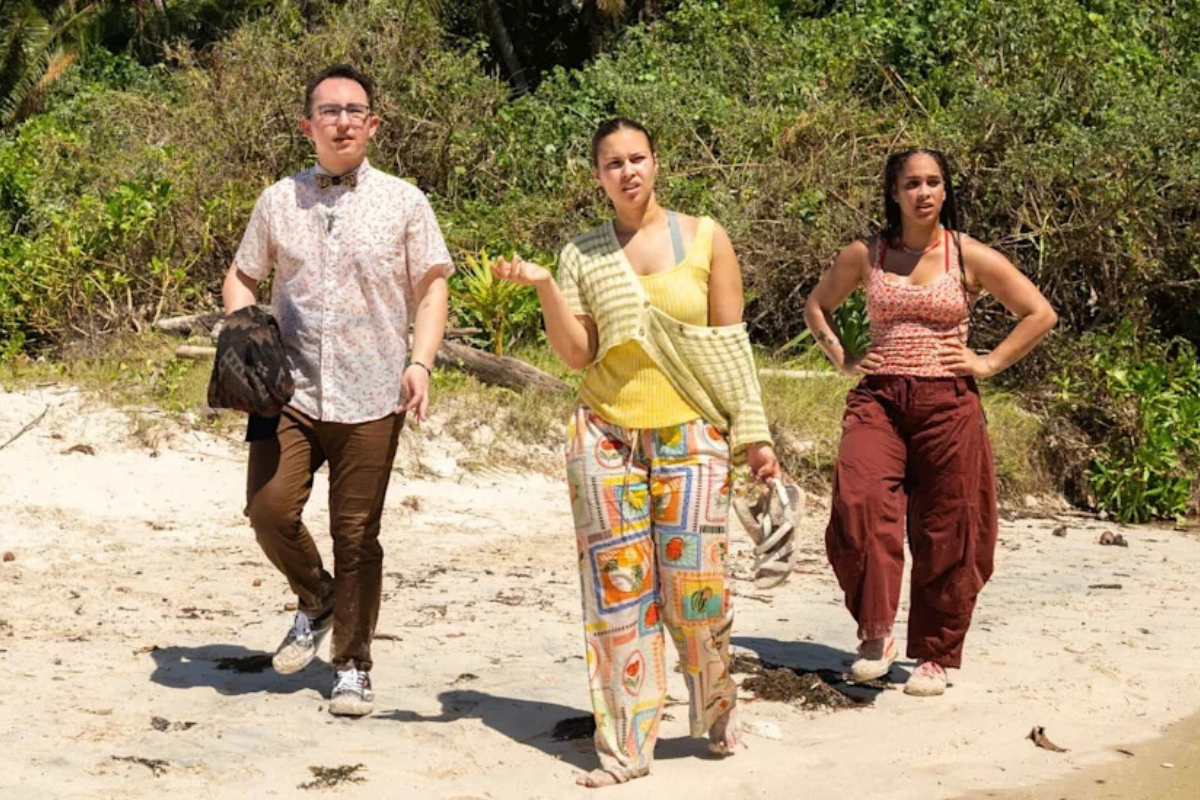
Survivor 51 Preseason Power Rankings: 21 New Castaways, 50 Seasons of Lessons, and My Pick to Win
Mike Pinsky helps the Yankees make roster decisions. Maggie Nestor farms, homeschools three kids, and lists pole vaulting among her hobbies, because apparently farming wasn’t keeping her busy enough. Danny “Kilby” Kilby designs games and plans to learn what makes you laugh before deciding whether he can trust you. And a sociology professor named Jelly is about to find out what happens when the research subjects can vote the researcher off the island.
Survivor is back, and this cast is ridiculous in the best possible way.
Season 51 brings 21 first-time players into the show’s Open Era. CBS says past twists, idols and advantages could return in any order and without warning. That doesn’t mean every twist will return. It means a player who builds a beautiful plan around last season’s rules may have a very bad Wednesday. The two-hour premiere airs September 23; the game lasts 26 days.
I’ve been through the cast questionnaires, the players’ own descriptions of their strengths, CBS’s cast material, my original handwritten first impressions, and the show’s history. The more I looked at the cast, the more Jelly, Cristian and Kilby intrigued me, but Mike and Maggie stayed at the top. I’m not pretending a casting interview reveals anyone’s soul; the fun is making an argument before we know who’s right.
My winner pick: Mike Pinsky.
The player I’m most excited to be wrong about: Jelly Loblack.
My first-boot pick: Rob Antonson.
Jenna and Sharonda are also in my danger zone.
Keep the receipts.
What 50 Seasons Actually Tell Us
The tempting thing is to see “lawyer” and write great liar, or see “farmer” and write great survivor. That isn’t analysis; it’s a Mad Lib. The more useful question is whether a person’s actual experience can help them be useful, gain information, survive a bad vote and persuade the jury that their relationships were real.
There are a few numbers worth carrying to the beach. The U.S. Bureau of Labor Statistics counted winners by occupation through Season 48: eight in management, five in protective service, four each in business/financial operations and sales, two in legal jobs, and one in farming/fishing/forestry. Those are counts of winners, not win rates for everyone who ever worked in those fields. They do not mean Mike is eight times likelier to win than Maggie; occupations are broad, careers change, and we don’t have comparable application and cast denominators here.
A more interesting study of 535 players across 30 seasons found advancement involved both task performance and the strength of players’ social connections. Translation: carrying the tribe through a challenge helps, but having people who will share information and protect your name helps too. The study does not tell us which Season 51 contestant will do those things; it tells us what to watch for.
Look at the winners. Richard Hatch established the power of an alliance. Sandra Diaz-Twine made herself useful to changing coalitions. Tony Vlachos could make big moves because he had people working with him. Maryanne Oketch saved a crucial strategic reveal for the end. Kenzie Petty showed how much a jury can value a relationship. And Aubry Bracco, the Season 50 winner, illustrated the importance of choosing when to emerge. There isn’t one winner archetype. There is a recurring problem: being important enough to win without becoming urgent enough to eliminate.
With 21 equal candidates, everyone would begin at about 4.8%. My percentages are an editorial allocation of 100 percentage points, not the output of a fitted statistical model and definitely not betting advice. They’re a transparent way to show where I see a stronger or weaker path to the title. Rank 21 is my separate first-boot call, not a claim that the player has a 99% chance of leaving first. Each comparison below uses a different former castaway and describes a strategic resemblance, not an interchangeable personality.
The short version: Mike Pinsky and Maggie Nestor lead my board. Alexis Levine, Carter Krull and Cristian Chavez round out the top five. Brady Booker is up to No. 15; Jenna Doore, Sharonda Cox and Rob Antonson are my final three. Every player’s percentage and full reasoning are below.
These placements aren’t just a ranking of who has the most impressive job or the best audition. I’m weighing how someone gets through the first nervous vote, whether they can learn about decisions made without them, how they handle a broken plan, and what they could plausibly claim at Final Tribal Council. When two players look close, I’m choosing the one whose route I can describe more clearly. The big caveat: we don’t know starting-tribe chemistry or what the Open Era actually throws at them yet.
Survivor 51 Preseason Power Rankings
1. Mike Pinsky – 12% | The Front Office Finally Gets To Play
32 | Baseball executive | Historical comparison: Charlie Davis

The most interesting thing about Mike isn’t that he works for the Yankees. It’s what he does there. MLB identifies him as an assistant director of baseball operations who advises on roster construction and contract negotiations. That means sorting through competing priorities, incomplete information and people who don’t necessarily want the same deal. He has been a Survivor fan since he was eight, too, which gives him a historical reference library without having to announce “as you know, in Season 37…” at breakfast.
His answer about an ideal ally was the one that sold me: he wants somebody who can tell him about conversations he wasn’t in. That is how a good Survivor player thinks. The dangerous person isn’t always the one running the meeting; it’s the one who learns what happened after the meeting. Mike also recognizes that he’s reasonably athletic, strategic, and social without being the biggest physical or personality threat in the group.
The strongest part of the case is information gathering, measured self-presentation and an actual plan for the gaps in his own knowledge. The concern is that an executive who’s used to being right can make people feel managed, and one highly strategic ally might recognize his game immediately. Former Marlins president David Samson’s quick exit on Cagayan is a useful warning: baseball credentials don’t buy immunity. What separates him from the rest of the board is that he has already described the kind of information he wants. Lots of superfans promise to build alliances; Mike is asking who will tell him what happened when he wasn’t standing there. That distinction matters when an idol, a journey, or a split vote changes the math overnight. An ally can promise loyalty and still leave you blind. An ally who brings you bad news gives you a chance to do something about it.
I have him just ahead of Maggie because his route to the end includes both relationships and a way to spot trouble before it reaches Tribal. He doesn’t need to be the loudest strategist to have influence. His problem starts if he confuses collecting information with collecting people. Tribemates aren’t prospects to be evaluated, and the best relationship may be with somebody who tells Mike he’s wrong. A contender needs a blind spot; that’s his. That is where the Charlie Davis comparison comes in. The Survivor 46 finalist balanced positioning, social capital and a game he could explain. Mike needs that kind of story, with a little more endgame separation. In the premiere, I am watching one thing: does someone bring Mike information voluntarily, or does he look like he’s interviewing for it?
2. Maggie Nestor – 11% | Don’t Mistake the Camp MVP for a Passenger
40 | Farmer | Historical comparison: Tina Wesson

Maggie’s cast profile reads like she was assembled in a laboratory for the “we are cold, wet and hungry” portion of Survivor: farming, gardening, hunting, fishing, cooking, running, lifting and, yes, pole vaulting. She homeschools her three children, has followed the show for 25 years and says she wants a creative ally willing to make bold moves. “Useful mom” is a lazy description of a woman who is clearly here to play. A lot of early Survivor is a vote about who makes the next day easier. Maggie can plausibly do that without needing to take charge of every conversation. Her own answer about her greatest strength is also unusually self-aware: connecting with people could become a liability if everyone realizes how connected she is.
The strongest part of the case is that practical value gives her time to develop real friendships, and her stated interest in bold moves suggests she won’t automatically settle for a background role. The concern is the person everybody likes can become the person everybody calls a jury threat. She also has to be included in the votes, not just included in the chores.
Here’s why I can put a farmer above players with flashier strategic pitches: the first vote is rarely an abstract argument about the ideal final three. It is a bunch of tired strangers deciding whose absence would make the next two days harder. Maggie’s outdoor experience gives her a natural reason to be part of the camp’s daily life. Homeschooling and managing a family don’t prove she can negotiate a vote, but they do suggest she has spent years adjusting to several people’s needs at once. Those are genuine opportunities to earn trust, not automatic bonus points for being a mom.
She’s No. 2 rather than No. 1 because Mike has articulated a clearer information strategy. Maggie’s path becomes just as strong if the people she feeds, works beside and jokes with also bring her into decisions. Imagine getting to the merge with three people who each think Maggie is their person. That’s not a camp-mom edit. That’s a potentially terrifying endgame. That is where the Tina Wesson comparison comes in. Warmth, trust and being underestimated can be a serious strategic toolkit. Maggie’s path isn’t simply “survive the outdoors”; it’s making people want to sit beside her when the outdoor part ends. In the premiere, I am watching one thing: does someone ask Maggie whom to vote for, not just where to put the shelter?
3. Alexis Levine – 9% | The Defense Attorney Who Knows How To Play From Behind
34 | Criminal-defense attorney | Historical comparison: Sarah Lacina

Alexis could be an easy “lawyer equals persuasive” pick. Her actual questionnaire is better than that. Criminal defense has taught her to work from an underdog position, and she says an ally who thinks differently from her is valuable. In her strengths interview, she points to staying calm when things get chaotic. That is an intriguing set of answers for the Open Era. A player who can lose a vote without falling apart may have more options the next morning than the person who insists on knowing who betrayed them. My first impression was that she would be smart, forceful and strategic; the published material gives me a concrete reason to think she can do more than argue her preferred plan.
The strongest part of the case is composure, an understanding of the minority position, and a willingness to work with contrasting viewpoints. The concern is the courtroom skill that wins an argument can cost an ally if it makes them feel cross-examined. Being persuasive isn’t the same as letting other people feel ownership of the vote. The ranking gap between Alexis and Carter is narrow, but I give Alexis the edge on one specific question: what happens when your first plan fails? Carter can be enormously useful when his tribe is functioning. Alexis has spent her professional life representing someone whose preferred outcome is already in danger. Her own language about playing from behind makes me think she might be able to take a hit, keep talking to the people who inflicted it, and find the next opening. A season advertising uncertainty should reward that kind of recovery.
Her path is not simply “win the argument.” A five-person vote does not come with a judge who will decide whose reasoning is better. If she becomes the person who listens first, translates a nervous ally’s concerns and makes the plan feel like a shared decision, I can see her holding a coalition together. If every beach conversation feels like a deposition, Carter and Maggie will have a much easier time keeping people comfortable. That is where the Sarah Lacina comparison comes in. Navigating competing relationships and deciding when to turn can beat simply gathering a crowd around a single leader. In the premiere, I am watching one thing: when someone disagrees with Alexis, does she recruit them or try to convince them they’ve misunderstood the facts?
4. Carter Krull – 8% | The Guy Who Can Build the Shelter and the Alliance
24 | Livestock farmer | Historical comparison: J.T. Thomas

Carter farms livestock, launched a snow-cone truck, helped build a moving company and likes woodworking. This isn’t a “farm boy is good with his hands” cliché; his own profile shows someone who has started businesses, worked with customers and made things happen when there wasn’t a ready-made playbook. Asked for his greatest strength, he says he’ll outwork anyone. His alliance answer is more revealing: he wants communication and mutual trust. I like that combination. Early on, work buys people a reason to keep you. Communication buys you a reason to trust them. Carter also knows that the game changes with the situation, even if his dream mixture of Tony, Ozzy and Boston Rob is enough Survivor ambition for three contestants.
The strongest part of the case is an unusually wide practical résumé, no obvious need to run every conversation, and a philosophy of keeping allies informed. The concern is being indispensable at camp doesn’t automatically mean you have the numbers. If everyone thanks him for the firewood while quietly deciding the vote elsewhere, the résumé won’t help. Carter lands above Cristian because his two early-game assets are unusually visible: you can watch him contribute, and you can watch him make a stranger feel included. That matters when 21 people are trying to sort out who’s helpful and who’s just auditioning to be the narrator. The snow-cone truck and moving-company experience also interest me more than the word farmer alone. Customers, coworkers and problems don’t arrive in neatly designed challenge rounds. Carter has at least described a life of switching roles when needed.
The catch is a Survivor classic: you can be everybody’s favorite guy to have around and still find yourself outside the alliance that actually makes the vote. Maggie ranks above him because her interview gives me a clearer sense that she wants creative, bold allies; Alexis ranks above him because she’s more explicit about playing from a disadvantage. Carter’s ceiling is every bit as high as theirs if he proves he knows who has his back before the fire goes out. That is where the J.T. Thomas comparison comes in. The best version of the likable workhorse doesn’t just contribute; people actively want to follow him. In the premiere, I am watching one thing: who hangs out with Carter after the work is done?
5. Cristian Chavez – 8% | The Little–Brother Act Has Teeth
26 | Head of HR | Historical comparison: Yam Yam Arocho

Cristian describes himself as fun, chaotic and loud, got a master’s degree at 21, is a dad, and grew up doing homemade Survivor challenges with his father. My initial note was “little-brother energy.” His interviews give that read a much sharper edge: he likes being underestimated, wants an ally who thinks differently, and cares about understanding why a person is making a choice. Working in HR doesn’t make him a professional mind reader. It does mean he has experience handling competing personalities without always getting to pick who enters the room. That could be extremely useful when a twist turns yesterday’s comfortable majority into today’s awkward group chat. He also says he can be ruthless if necessary. The sweet, goofy surface isn’t his entire pitch.
The strongest part of the case is a disarming first impression, real ambition and attention to other people’s motivations. The concern is that telling everybody that your strategy is being underestimated somewhat defeats the purpose. And the player who wants to be everybody’s friend can learn that everybody talks. This is the exact point where the board shifts from “I trust the path” to “I love the upside.” Cristian might be the most naturally disarming person in the top five. Someone who can be playful, make people feel heard and absorb a room’s competing personalities has a route into almost any voting bloc. A player who gets underestimated can also recover from mistakes that would set off alarms if Mike or Alexis made them.
So why isn’t he third? Because his pitch is also a warning label. If everybody sees the loud, fun, underestimated kid and then hears how delighted he is to be underestimated, he could become a threat faster than he expects. Carter doesn’t have to explain why he’s carrying water; Cristian has to prove the fun is a relationship and not just a clever disguise. If he finds one ally who trusts the serious version of him, this No. 5 will feel conservative. That is where the Yam Yam Arocho comparison comes in. Humor and social instinct can turn an apparent outsider into a central player. Cristian’s version may be louder and riskier. In the premiere, I am watching one thing: can he stop being the funniest person at the fire long enough to become somebody’s first call?
6. Angelica “Jelly” Loblack – 7% | The Sociologist Has Entered the Experiment
29 | Sociology professor | Historical comparison: Denise Stapley

Jelly nearly broke into my top five after I revisited my first impression. I’d weighed the question of whether she’s outdoorsy more heavily than the far more interesting evidence. Jelly says Survivor helped draw her toward sociology, and her PhD work involved interviewing and ethnographic observation. She identifies her strength as asking questions that get people to open up. That’s not a magic lie detector; it is experience paying attention to how groups actually function. Her questionnaire is funnier than the academic headline makes her sound: she won a comedy-mascot award, enjoys debating, and wants an imaginative ally who will take a chance. She even acknowledges her own ego when describing the ally she’d need. I can see her forming the kind of quiet one-on-one relationships that produce useful information without an idol in sight.
The strongest part of the case is listening, curiosity and a better-than-average vocabulary for group dynamics. The concern is observing people isn’t the same as earning their trust, and announcing that sociology is your superpower may make a tribemate feel like a research subject. A bad first challenge also doesn’t care how good your dissertation was. Jelly is the person on this list most likely to make me throw the whole thing away after Episode 1.
I have her sixth because her stated strengths go directly to the hardest part of Survivor: people tell different stories about the same event, and somebody has to understand why. Her interviewing background gives her a reason to ask good follow-up questions rather than race to supply her own interpretation. But a doctorate isn’t an idol. A person can be excellent at analyzing a group and still be the person that group decides it doesn’t need.
Maggie’s outdoor usefulness and Mike’s explicit intelligence network are easier for me to picture on Day 2; Jelly’s advantage depends on how the other players respond to her. If they enjoy talking to her and she shares something real in return, she may become the quiet meeting place for competing alliances. If her curiosity feels one-sided, they’ll stop talking. Sixth is not a ceiling. It’s my admission that the most fascinating résumé on the cast has an unusually important first impression to make. That is where the Denise Stapley comparison comes in. Denise’s social work happened in the uncomfortable, personal spaces of camp. Jelly has to turn professional curiosity into friendship. In the premiere, I am watching one thing: does she let people get to know her, or just get them to tell her everything?
7. Danny “Kilby” Kilby – 7% | Maybe the Gamer Who Remembers There Are Humans in the Game
30 | Game designer | Historical comparison: Christian Hubicki

Kilby doesn’t merely know Survivor; he met his partner through a fan-made version of it. He designs games, loves strategy-heavy board games and says student government taught him to manage different groups and egos. The detail I keep coming back to from his interview is his desire to learn a potential ally’s real laugh. He wants people to have fun with him, and he understands that a bond tells you things a vote-counting spreadsheet won’t. My first impression was Christian Hubicki vibes, and I still like the comparison. A likable brain can make it deep if people see him as a friend who understands the game rather than a guy running a live demonstration of it.
The strongest part of the case is mechanical knowledge, a practiced social approach, and experience adapting to different groups. The concern is if every vote sounds like something he’s already simulated, people may decide the solution is to vote out the simulator. He also has to accept that sometimes a strategically worse move is better for a relationship. There is a reason I have Kilby right behind Jelly instead of dropping the “game designer” into the generic superfan pile.
He isn’t only promising to identify optimal moves; he’s identified an actual social behavior: find out what makes somebody laugh. That’s small, repeatable, and useful when the strategic conversation is too tense to go anywhere. Someone who spends the day teaching everybody a game can become a target. Someone who helps the tribe enjoy a terrible afternoon gets asked to stick around.
I still put him below Jelly because knowing the rules of a game doesn’t mean you can predict players who don’t care about playing neatly. The Open Era could create a familiar twist, but it could just as easily create a human problem with no clever solution. Kilby’s win equity grows if he can let an ally make a messy call without correcting it. Let the tribe think he’s fun at camp, then discover in the voting booth how much he understood all along. That is where the Christian Hubicki comparison comes in. Being both smart and beloved is powerful; being publicly recognized as both makes the next vote harder. In the premiere, I am watching one thing: can Kilby resist explaining every twist before Jeff has finished the sentence?
8. Lewis Kelly – 6% | Irish Charm, Irish Chaos, and a Very Thin Line
28 | Farmer | Historical comparison: Tyson Apostol

Lewis has traveled to more than 40 countries, lives in a converted school bus with his wife and says a trip to North Korea taught him something about uncertainty and isolation. Those are unusually specific experiences for a player entering an uncomfortable, unpredictable game. His cast answers are playful, and his strengths answer boils his whole character down to charm versus chaos. There’s a winning version of this: make the rain bearable, keep people laughing and use the image of a lovable troublemaker to hide the decisions that matter. My original notes said he’d be a favorite or get caught being sneaky. That still feels right. I have him below Mike and Maggie because their proposed routes sound steadier, not because Lewis lacks upside.
Lewis is the board’s biggest tug-of-war between I want this guy on my tribe and I would like to know what he’s doing when I’m not there. Long-term travel and an unconventional home life give him real experience dealing with uncertainty. His own charm-versus-chaos framing makes me think he’ll have no trouble finding a story or a joke when camp is miserable. That can be glue for an alliance, especially when nobody has eaten and every little annoyance gets magnified.
But I rank him below the seven above him because his biggest weapon can also be his reputation. A castaway who enjoys playing the rascal doesn’t get the benefit of the doubt forever. If a surprise advantage disappears or a plan leaks, who gets suspected first? The funny guy who announced he likes chaos is a tempting answer. Lewis needs one relationship that survives the joke. Tyson is a useful reminder that being hilarious and being disciplined are not opposites; the winner’s version of Lewis will need both.
The strongest part of the case is genuine breadth of life experience and an easy social opening. The concern is once people decide you’re the prankster, every unexplained event starts sounding like your fault. That is where the Tyson Apostol comparison comes in. A joke-first presentation can hide a serious player, but the serious part needs loyal allies. In the premiere, I am watching one thing: who trusts Lewis when he isn’t performing?
9. Eric Macksoud – 5% | People May Tell Him Too Much
34 | Mental-health counselor | Historical comparison: Cirie Fields

Eric’s job is an obvious social-game asset, but the community-theater background in his profile may be just as relevant. He has experience joining a mixed group of strangers, finding a shared rhythm and working toward a common result. Add competitive swimming and Muay Thai, and he’s more physically varied than “the therapist” label suggests. He says he notices body language and emotional shifts. The problem with reading that somebody is upset is that it doesn’t tell you whether they’re upset with you. If Eric learns the difference, he could build one of the more reliable networks in the cast. If he decides he can see through everyone, his empathy could shade into overconfidence.
Eric has a credible route to a deep run that has nothing to do with diagnosing strangers across the fire. A counselor knows that listening is not the same as agreeing, and theater asks people to play their part while noticing everybody else’s cues. That’s useful alliance behavior. But I don’t have him above the top eight because the most comforting person on the beach can end up hearing everyone else’s worries without receiving a single useful vote commitment.
Being trusted with feelings and being trusted with a plan are two different things. His placement turns on that conversion. If two people from different groups each think Eric is the person they can tell the truth to, he suddenly has options that the challenge standout doesn’t. If he spends the pre-merge smoothing over conflict and never asks for anything in return, he could reach the merge with a warm reputation and no protection. Ninth is where I put the strong social résumé until I see a player turn a conversation into leverage.
That is where the Cirie Fields comparison comes in. The comparison is about getting people to choose you without needing to challenge dominance. The fastest way to change this ranking is simple: an ally sharing a risky secret with Eric is a much better signal than someone simply coming to him for a comforting conversation.
10. Patt Cannaday – 4% | The Prosecutor Who Wants To Get Into Shenanigans
33 | Federal prosecutor | Historical comparison: Sophie Clarke

Patt is not arriving with the personality of a courtroom transcript. She boxes, skydives, recounts an ill-advised hike in Brazil that ended in the dark, and describes herself as goofy, loyal and intense. Her profile asks for an ally willing to take risks and get into trouble with her; her strength, she says, is that the bubbly exterior can hide her competitiveness. I like the disconnect between the profession and the presentation. She might be able to notice an inconsistency without making the offender stand trial in front of the whole tribe. Her relative lack of loud superfan signaling could be a benefit if the cast is packed with people desperate to prove their knowledge.
Patt is where the “don’t confuse a job title with a personality” rule earns its keep. A prosecutor who boxes and skydives and wants an ally for shenanigans is not necessarily going to spend 26 days lecturing people on the evidence. I like that her profile includes both seriousness and a willingness to be ridiculous. Underestimating her because she seems bubbly could give her the kind of low-pressure opening that the more openly analytical castaways won’t get.
I don’t push her into the top tier because I know less about the actual alliance architecture she wants than I do with Mike, Alexis or Carter. She says she wants someone willing to take risks; the question is whether they will trust each other after one of those risks goes wrong. If Patt can stay playful while making a firm call under pressure, she moves up quickly. If she gets stuck between loyalty and the correct vote, she may end up making a very convincing case to the wrong jury: the one at Tribal Council.
That is where the Sophie Clarke comparison comes in. Clear thinking within a coalition can be more valuable than constant center-stage leadership. The fastest way to change this ranking is simple: watch whether Patt can let somebody else be wrong in public and quietly get the vote she wants anyway.
11. Aaliyah Puglia – 4% | A Chef Who Knows How To Start Over
24 | Chef | Historical comparison: Maryanne Oketch

Aaliyah’s best evidence isn’t that kitchens are stressful. It’s that she has repeatedly put herself in new groups: moving from New Jersey to Miami as a teenager, arriving at college in Rhode Island without knowing anyone, and traveling alone. Her interview gives a concrete history of adjusting to unfamiliar people, and she says adaptability is her biggest advantage. My first impression was bold, direct and possibly a little too ready to take charge. That’s an impression, not a verdict. The same big personality that could irritate one group could be the reason another group trusts her to say the awkward thing out loud.
The reason Aaliyah sits just outside my top ten isn’t a lack of tools. She’s the kind of player who has deliberately entered unfamiliar environments over and over, which is a better indicator of possible flexibility than simply saying “I adapt.” Her chef background may help in a hungry camp, but the real asset is that she says she’s comfortable walking into a room where she knows nobody. That’s the game on Day 1, and it will be the game again whenever the tribes are mixed up.
My hesitation is about pace and tone. In a professional kitchen, clear direction can keep things moving; on a tribe, one person’s urgency can feel like another person’s orders. Patt gets the spot above her because her playful presentation may create less early friction, and the top contenders have given me clearer descriptions of how they’ll maintain an alliance. If Aaliyah gets past that first adjustment, she has the tools to jump several places at once. A loud player who listens is a very different prospect from a loud player who only waits to talk.
That is where the Maryanne Oketch comparison comes in. An expressive public persona can make people miss strategic patience underneath it. The fastest way to change this ranking is simple: does Aaliyah make space for other people’s ideas, or does she become the unofficial kitchen manager of a kitchen with no food?
12. An “Thien An” Nguyen – 4% | Sweet Is Not the Same As Soft
24 | Medical student | Historical comparison: Kenzie Petty

Thien An has Scout experience, has run marathons on a whim and reports winning back-to-back intramural all-around titles. That’s a more surprising résumé than “medical student good at science.” She wants to be overlooked until the moment to strike, and her strengths interview acknowledges that genuine empathy could make the voting-out-your-friends part hurt. My original note called her big-personality and very friendly. I don’t think friendliness is the danger; the danger is assuming an emotional connection guarantees the other person will vote with you. If she combines that warmth with the outdoor and athletic skills she describes, she has more upside than this slot suggests
There’s an alternate universe where Thien An becomes everyone’s favorite person and I’m embarrassed that I left her at twelve. The Scout and athletic details make her less of a pure social bet than I first assumed; she may be able to help in challenges and contribute at camp while getting to know people. A player who can keep things light without making others do all the work is somebody an early tribe has good reason to keep.
The reason I have Aaliyah just above her is that Aaliyah has described more specific experience walking into new groups and starting over. Thien An’s own acknowledgment that close relationships could complicate hard votes is charming and potentially consequential. The first time she knows an ally must go, she needs to be able to act and then repair whatever relationship is salvageable. If she can do that without losing the warmth that got her there, the comparison to Kenzie starts looking a lot less aspirational.
That is where the Kenzie Petty comparison comes in. Relationships can be winning moves rather than a distraction from them. The fastest way to change this ranking is simple: how does she react the first time a person she likes lies to her for an understandable game reason?
13. Kristin Flickinger – 3% | The Crisis Manager Who Can’t Appoint Herself Crisis Manager
49 | Crisis-management professional | Historical comparison: Chrissy Hofbeck

Kristin has been applying since the show’s early days, works with people and communities in difficult situations, and helped create a culinary program connecting LGBTQ+ youth and seniors. That’s meaningful experience building a team, not just a vague “leader” label. She says her skill is flexibility and reading the room. The risk is timing. On Day 1, a little direction can be welcome. On Day 3, somebody saying “we need a process” may discover that the tribe’s process is writing down her name. My initial scouting note wondered whether her idea of laid-back matches how others might experience her. Her interviews give me reasons to take the adaptability seriously, but that question remains.
Kristin has a better résumé for this game than thirteenth suggests. Working in a crisis means dealing with frightened people and making decisions without the luxury of waiting for perfect information. A long-running interest in the show means she knows what a bad leadership edit looks like. The part I can’t project is how much she can resist stepping into the leadership vacuum when everything at camp is going sideways. Sometimes people thank the person who takes over. Sometimes they quietly decide to vote her out the second they have a chance.
I put her below Thien An because Thien An’s friendliness seems to come with less obvious authority, which can be an advantage in a nervous first vote. Kristin’s route to outperform this ranking is easy to describe: become the person who helps a leader succeed without needing the title herself. Let the tribe discover her judgment through one-on-one talks rather than a group announcement. Competence is an asset; making people feel supervised is the possible problem.
That is where the Chrissy Hofbeck comparison comes in. Competence creates options and, when it’s too visible, opposition. The fastest way to change this ranking is simple: does Kristin steady a panicked ally without turning the moment into a performance review?
14. Linnea Capobianco – 2% | Networking Isn’t the Same as a Number
25 | Entrepreneur | Historical comparison: Dee Valladares

Linnea says working in Washington taught her to develop relationships across disagreements. The most telling small detail in her questionnaire is that she dislikes seeing someone excluded from a conversational circle. That suggests she’s looking at how people actually feel inside a group, not just how many contacts she can collect. My first impression was that a strong personality might crowd people. Her own answers complicate that read in a good way. Still, it’s entirely possible to be socially fluent with everybody and strategically indispensable to nobody. She says she values a rational ally, and the island will feature tired people making decidedly irrational decisions.
Linnea’s stated discomfort with somebody being left out of a conversation is a small detail I keep revisiting. Those are the kinds of moments where a majority can lose a vote without noticing: a person who feels invisible finds the first outsider who asks how they’re doing. Linnea might be the outsider who asks. Her experience developing relationships across disagreement gives me reason to think she could make a group feel bigger, not smaller.
Why only fourteenth? A wide social circle isn’t automatically a working majority, and my earliest impression was that she could come on strong. With a season full of confident people, warmth and confidence need to leave room for someone quieter to disagree. I have Kristin above her because Kristin has a clearer professional example of managing group stress; Brady sits just below because his threat might be visible sooner. Linnea’s task is to make one of those many conversations turn into a real plan that includes her.
That is where the Dee Valladares comparison comes in. A tight center matters more than a huge contact list. The fastest way to change this ranking is simple: can Linnea create one ride-or-die who brings her bad news, rather than a dozen people who tell her she’s great?
15. Brady Booker – 2% | The Wrestler Has More Tools Than You Think
27 | Professional wrestler | Historical comparison: Jonathan Young

Brady’s profile includes gymnastics, hunting, fishing, camping, jiu-jitsu and the social politics of professional wrestling. That’s a useful first-week set of skills. His stated strength is making others comfortable and keeping things light, which is probably more important than how much weight he can lift. Here’s the catch: nobody will forget he’s there. A physically imposing player with a big personality can become an easy post-merge target even when he has done nothing wrong. But this isn’t a prediction that athletes are doomed; it’s a prediction that Brady has to build relationships strong enough to survive the moment when his physical value becomes his liability. This is a player I am excited about, but reluctantly, they never make it super far.
I actually moved Brady up a couple spots from my initial rankings. Wrestling isn’t simply being strong in front of a camera. His own account of long days, scarce sleep and food, plus the backstage social side of the business, is at least relevant to living with a group that is tired and competitive. Add the camping, fishing, and gymnastics, and I see somebody who can help early without needing to pretend he’s a puzzle prodigy. His interview also emphasizes keeping other people comfortable. That is a more promising Survivor pitch than “I’ll win every challenge.”
I still stop at fifteen because this isn’t a competition to hire the nicest guy to carry the shelter. As soon as individual immunity enters the conversation, a clearly capable athlete may become everybody’s agreed-upon problem. Devin and Ori have useful résumés too, but Brady’s outdoor background and deliberate light touch give him a slightly cleaner first-week path than either. To climb higher, he needs a voting partner who keeps him informed even on a day when no challenge is scheduled.
That is where the Jonathan Young comparison comes in. Obvious challenge ability is both an asset and a flashing neon sign. The fastest way to change this ranking is simple: does somebody tell Brady the vote because they trust him, rather than because they need him to win tomorrow’s challenge?
16. Devin Way – 2% | An Actor Who May Have To Rewrite His Loyalty Rule
33 | Actor | Historical comparison: Joe Hunter

Devin grew up with 12 siblings, plays Dungeons & Dragons and says he can make friends with anyone. The D&D detail is more useful than a generic “actor knows how to deceive” line: he has practice improvising a story with people who all want different things to happen. His cast answers also say that if an ally lies to him, he might seek a new alliance immediately. That’s my hang-up. Sometimes the person who burned you at the last Tribal is your most useful vote at the next one. My early read was that Devin might come in a little too confident; I can also see a warm, interesting player who finds his people quickly. Both can be true.
I want Devin higher for entertainment value alone. Twelve siblings and a background in collaborative role-playing sound like good practice for negotiating who gets the last word. Acting can also make a stranger comfortable quickly. But the game won’t reward him just for making an excellent first impression. It will eventually ask whether he can cooperate with somebody who made him look foolish the night before. His stated instinct to seek a new alliance after an ally lies is exactly the kind of line that makes me nervous in an Open Era built for scrambled plans. Brady ranks ahead because I can picture Brady earning some protection by quietly being useful.
Ori ranks just behind Devin because Devin has more explicitly described adapting to different personalities, even if I have questions about the loyalty piece. For Devin, the difference between a breakout run and a quick exit might be one uncomfortable conversation: “I know you lied. Can we still work together?” If he can say that without turning it into an ultimatum, his ceiling is higher than No. 16.
That is where the Joe Hunter comparison comes in. Loyalty and emotional investment can make a player memorable and give them hard decisions to navigate. The fastest way to change this ranking is simple: can Devin treat betrayal as information rather than the end of a relationship?
17. Ori Jean-Charles – 2% | He’ll Need More Than the Challenge Résumé
27 | Personal trainer and former college football player | Historical comparison: Jeremy Collins

Ori tells a detailed story about changing schools to be nearer his injured mother, making punishing drives home and continuing to excel at football. He talks about helping his family with the prize money and says his social strength is making people comfortable. That’s a real person with a compelling reason to play, not a cardboard cutout labeled ATHLETE. My concern is the obvious one: if people watch him carry early challenges, they may later decide he has to go before individual immunity becomes his insurance policy. He’s also clear that he wants allies willing to take the shot when an opening appears. An ally who needs another day to think could test his patience.
Ori might be the person whose placement ages worst, and that’s worth saying before the premiere. His life story gives him motivation and evidence of commitment; the athletic résumé could keep his tribe out of Tribal Council long enough to build relationships. There’s a legitimate argument that he deserves to be above several social-first players. But once the game becomes individual, an obvious physical threat has to answer a question that a quieter player may never face: why should the alliance keep him when immunity is up for grabs?
That is why I have Devin and Brady slightly ahead. Brady describes more outdoor versatility, and Devin’s background suggests more experience reading the shifting demands of a group. Ori can leapfrog both if the warmth he talks about produces an ally willing to defend him when everybody else decides the strong guy needs to go. A challenge win is an achievement; somebody risking their own position to keep you is a much stronger Survivor signal.
That is where the Jeremy Collins comparison comes in. The family motivation and need for protective relationships are more relevant than the muscles. The fastest way to change this ranking is simple: does Ori make someone feel safer with him than without him once the tribe doesn’t need to win together?
18. Ana Sani – 1% | Maybe Don’t Advertise the Betrayal Package
34 | Voice actress | Historical comparison: Angelina Keeley

Ana has voiced more than 60 animated shows and studied political theory. That suggests persistence, reinvention and a genuine interest in power, as described in her cast interview. She’s also open about enjoying deception and imagines using a trusted person’s secrets strategically. That’s a potentially terrific TV character; it is a harder sell as your opening pitch to people choosing whom to trust. I could be badly underestimating her. Acting work doesn’t mean she is fake, and talking boldly before the game doesn’t mean she’ll act boldly in it. But an early tribe doesn’t need proof of an elaborate scheme. Sometimes a suspicion will do.
Ana has one of the easiest storylines to imagine and one of the hardest paths to trust. Voice work involves tailoring a performance to an audience, and her stated enthusiasm for deception could make her a lively, inventive player. It could also give a nervous cast an easy way to rationalize an early vote. They don’t have to catch her doing anything. They just have to say they worry she’s capable of it. On Survivor, a reputation can arrive before a résumé gets a fair hearing.
I put her ahead of Jenna, Sharonda and Rob because I can at least picture a strategy emerging if Ana finds people who enjoy the mischievous side of the game. Her position is less about whether deception is bad—every winner has to conceal something—and more about how quickly she wants people to notice she’s comfortable with it. Find two honest connections first. Save the clever betrayal for the point when it serves a relationship or a vote, not just a confessional.
That is where the Angelina Keeley comparison comes in. Ambition and memorable moments can coexist with a surprisingly complicated game. The fastest way to change this ranking is simple: can Ana keep the chaos in the confessional until she’s built two relationships she actually wants to protect?
19. Jenna Doore – 1% | The Enthusiasm Has To Land Somewhere
30 | Wedding photographer | Historical comparison: Carolyn Wiger

Jenna has built a photography business from a camera she bought with babysitting money and says she has tucked a “Survivor clause” into her wedding contracts for years. Those are concrete signs of commitment and initiative. She also describes herself as a deep feeler who knows empathy could either help or complicate her game. Her interviews give her a better case than my immediate reaction to her high-energy introduction did. Still, the first impression matters in an early vote. My subjective read is that she may try to create close friendships at a pace the rest of the tribe hasn’t agreed to. Everybody wants authentic relationships; not everybody wants to share their life story before the shelter is standing. Of course, Carolyn taught us how thoroughly a cast — and audience — can misread someone who doesn’t present conventionally.
Jenna’s low placement is a read on first-week fit, not an assertion that she’s annoying or incapable. Her business story shows follow-through, and her long commitment to applying makes it hard to dismiss her as someone who stumbled into casting. I can imagine her being incredibly good at asking a stranger to open up. But an exhausted tribe has its own rhythm, and an energetic person who wants immediate closeness can sometimes be too much for somebody who just wants five quiet minutes. That’s my subjective pregame concern, and it’s the kind the premiere can disprove fast.
I have her above Sharonda because her professional work involves meeting people on an emotionally important day and creating a comfortable atmosphere. That offers a plausible route to one quick friendship if she adjusts her intensity to the person in front of her. Carolyn is the useful warning against judging a player by presentation alone. One tribemate who genuinely chooses Jenna would make this slot look silly; until then, I worry the group will make a social decision before they know her.
That is where the Carolyn Wiger comparison comes in. Big emotion and an unusual social style can carry real insight. This is a comparison, not an insult or a claim that Jenna will grate on everyone. The fastest way to change this ranking is simple: one quiet, reciprocal friendship in the premiere would make me rethink her place immediately.
20. Sharonda Cox – 1% | A Big Résumé, an Early–Game Question
34 | OB-GYN resident | Historical comparison: Michaela Bradshaw

On paper, Sharonda has plenty to like. Medical training involves demanding schedules, consequential decisions and earning patients’ confidence; she also fishes and describes herself as resilient and adaptable. Her questionnaire explicitly says an ally has to adjust if plans change shortly before Tribal. That’s actually a strong Open Era answer. So why second from the bottom? My original, subjective cast-reveal impression was that her competitive, cutthroat presentation might come across intensely in a group still looking for an easy consensus. There is a good argument for ranking her much higher based on her résumé, and I understand it. I’m making a first-week chemistry call, not declaring that a doctor lacks social skills. If the tribe responds well to her, this could look foolish by the first commercial break.
Here’s the uncomfortable truth about this placement: the résumé says “move Sharonda up,” and my first-impression note says “watch the opening vote.” Both deserve daylight. An OB-GYN resident has practiced staying functional through difficult circumstances and talking to people who need confidence, not a lecture. Her answer about changing plans right before Tribal is also one of the better strategic answers in this cast. If I were sorting the players by professional credentials alone, she would not be anywhere near twentieth.
But these rankings are a preseason prediction about this group, and my subjective read of her direct, competitive energy is that an anxious early tribe could seize on it before those strengths become visible. That is a thin evidentiary basis, so this is the shakiest placement on my board. Jenna’s photography business gives me a slightly clearer quick-bond pathway; Rob’s early-game combination worries me more. If Sharonda gets one patient listener and one solid vote beside her, she could erase ten spots of this ranking in a single episode.
That is where the Michaela Bradshaw comparison comes in. Visible competence and directness can win admiration while also attracting attention; Michaela’s actual games also show much more nuance than that thumbnail. The fastest way to change this ranking is simple: does Sharonda become the person others seek out for a calm conversation, instead of someone they only approach when a decision needs making?
21. Rob Antonson – 1% | My First–Boot Pick, With an Asterisk the Size of Fiji
40 | Airline gate agent | Historical comparison: Boston Rob Mariano

Rob has one of the most underrated actual jobs for Survivor: an airline gate agent meets strangers who are stressed, upset, hurried and sometimes convinced the rules should change for them personally. He says the chaos of an airport has prepared him for the game, and he’s a dad who coaches his kids’ teams. There is real social experience here. His profile also says he’s not an outdoors guy and admires Boston Rob’s swagger, while hoping to add some Tony-style manipulation.
My first reaction to his introduction was that the competitiveness might hit people too hard, too fast. A new tribe usually doesn’t need somebody announcing a pecking order; it needs someone who can help everybody get through a bad night. Rob may well have the airport patience to do that. I’m betting that the version of him who wants to play Boston Rob arrives before the version of him who can quietly build Boston Rob’s relationships.
Rob is my first-boot pick by process of elimination, not because a gate agent can’t handle people. In fact, that job could be terrific training for an exhausting social game. The question is whether his on-camera admiration for commanding, manipulative legends turns into behavior the tribe experiences as too much, too soon. Boston Rob didn’t win because he said he wanted control; he spent seasons learning to make people feel that following him made sense. Those are very different things.
The double risk, as I see it, is that Rob may be visibly eager to direct strategy while also needing more time to adjust to the outdoors than Carter, Maggie, or Brady. It would only take one unlucky early loss and a tribe looking for a simple vote. Could he be a breakout social player instead? Absolutely. He’s handled stressful strangers for a living. But if I must write down one name before hearing a single “come on in,” this is mine. And yes, I know exactly how bad that could look in seven days.
That is where the Boston Rob Mariano comparison comes in. Because that’s Rob’s own ambition — and because the famous, commanding version of Boston Rob was built over multiple appearances, not handed out at check-in. The fastest way to change this ranking is simple: if Rob can laugh at himself, do a fair share of camp work and let somebody else have the first big idea, my first-boot pick is in trouble.
The Prediction I Actually Want To Test
The Open Era may bring an idol we’ve seen, a rule we’ve forgotten, a new wrinkle, or none of the above in Week 1. I can’t forecast an advantage I haven’t seen. What I can look for is who recovers when the plan changes. Does Mike have a second information source? Does Maggie have a vote, not just a job? Can Cristian turn charm into loyalty? Does Jelly make a friend rather than conduct an interview? Can Rob let somebody else lead?
Those are the moves I want to watch, because the players who matter on Survivor are not always the people making the loudest moves. They’re the people the others keep choosing — until the day they don’t.
Final call: Mike to win, Maggie to make a deep run, Rob as my first-boot pick. The fun starts September 23. Tell me which one I’m going to regret most.
Thank you for following along with my Survivor 51 Preseason Power Rankings at In-Between Media (IBT)! For more entertainment content, check out our other blogs here at IBT. You can also watch our reaction video to Episode 1 here!
