This is where the 2026 NFL Draft class finally starts to breathe. There’s real depth here at the wide receiver position, a healthy mix of skill sets and multiple archetypes that translate cleanly to today’s NFL. From polished route technicians to explosive playmakers and versatile chess pieces, this receiver group offers answers rather than excuses.
Not every prospect is a future superstar, but there are plenty of players who can win in different ways, fit diverse offensive identities and carve out meaningful roles early. For NFL teams and dynasty managers alike, this class provides options, and after the uncertainty at other positions, that feels like a win.

The Top 10 Rookie Wide Receivers for the 2026 NFL Draft
1. Jordyn Tyson (Arizona State Sun Devils)
Jordyn Tyson is a polished, high-IQ wide receiver prospect who wins with route detail, body control and competitive toughness rather than pure speed. A technically advanced separator, Tyson consistently creates throwing windows through pacing, leverage and an advanced understanding of coverage. He brings alignment versatility and situational reliability to an offense, functioning as a true chain-mover who can also finish explosive plays down the field. Tyson’s game is built on nuance and timing, making him a natural fit for rhythm-based passing attacks that value precision and trust at the catch point.
Strengths:
- Route-running polish: Advanced technician who sells vertical stems and snaps off breaks with tempo and intent, routinely creating separation without relying on raw speed.
- Separation savvy: Consistently gets open using shoulder fakes, pacing and leverage manipulation; particularly effective against off and zone coverage.
- Contested catch ability: Times his leaps well and plays the ball with confidence and extension, finishing through contact and winning above the rim.
- Ball tracking: Tracks deep throws naturally over either shoulder, adjusting in stride and maintaining body positioning to shield defenders at the catch point.
- Zone awareness: Displays strong spatial intelligence, finding soft spots in coverage and working back to the quarterback when plays break down.
- Alignment versatility: Productive lining up outside, in the slot and in motion, allowing offenses to move him around without sacrificing effectiveness.
- Competitive edge: Reliable in high-leverage situations, showing toughness over the middle and delivering in late-game and third-down scenarios.
- Blocking effort: Willing and engaged run blocker who plays with physical intent and contributes beyond the box score.
Concerns:
- Durability history: Multiple injuries across consecutive seasons raise long-term availability questions that will be heavily scrutinized during the medical process.
- Functional strength versus press: Leaner frame allows physical corners to disrupt timing early in routes, particularly against aggressive press coverage.
- Top-end speed: Timed speed is average by NFL standards, limiting his ability to consistently win vertically on pure go routes.
- Route efficiency: Can occasionally round off breaks or tip routes with rising pad level, which NFL defenders will exploit.
- Concentration lapses: Drop numbers across prior seasons suggest occasional focus issues that need tightening at the next level.
Overall Evaluation
Projecting as a starting-caliber NFL wide receiver, Jordyn Tyson can thrive in timing-based, intermediate-focused passing offenses. His separation skill, coverage awareness and contested catch ability give him a clear path to early playing time, particularly as a quarterback-friendly target on third downs and in high-leverage situations. While he may never be a pure speed-based vertical threat, his ability to win with craft and intelligence should translate smoothly to the professional game. Medical evaluations will ultimately determine how high he goes, but if cleared, Tyson profiles as a reliable long-term starter with WR1 upside in the right system. His floor is a high-end complementary receiver; his ceiling is a primary target whom quarterbacks trust when the game is on the line.
2. Carnell Tate (Ohio State Buckeyes)
Carnell Tate is a technically advanced wide receiver who wins with polish, ball skills, and an advanced understanding of coverage rather than raw athletic dominance. A smooth mover with natural body control, Tate consistently creates advantages through route tempo, spatial awareness and reliability at the catch point. He profiles as a quarterback-friendly target who thrives in structured passing games, offering immediate value as an intermediate weapon and chain mover with situational vertical upside. His game is built on timing, detail and trust, all traits that translate quickly to the NFL level.
Strengths:
- Ball skills and catch-point control: Excellent high-point ability with strong hands and body positioning, consistently extending away from his frame to finish through contact.
- Route pacing and manipulation: Sells vertical routes with tempo and eye discipline, forcing defenders to open their hips before snapping off comebacks and stops.
- Deep-ball tracking: Tracks the football naturally at full speed, adjusting over either shoulder while maintaining leverage between the defender and the catch point.
- Reliable with his hands: Natural hands catcher with low drop rate, plucking the ball cleanly rather than letting it into his body.
- Zone awareness: Advanced feel for spacing, consistently settling into soft spots or drifting with his quarterback when plays break down.
- Underthrown-ball adjustment: Elite at working back to the football, preventing defenders from undercutting routes and turning potential interceptions into completions.
- Toughness in traffic: Willing to work the middle of the field, absorb contact and secure catches in congested areas.
- Explosive-play flashes: Shows the ability to generate chunk plays downfield when given free releases and space to build speed.
Concerns:
- Top-end speed: Timed speed is below ideal for an NFL boundary receiver, limiting consistent vertical separation against high-end corners.
- Release versus press: Leaner frame allows physical corners to disrupt timing early, particularly against press-heavy defenses.
- Functional strength: Needs added play strength to better handle contact throughout routes and at the catch point.
- Route tells: Can tip breaks on comebacks and stops with pad-level rise, which disciplined NFL corners will recognize.
- Durability monitoring: Missed time with soft-tissue injury in 2025, making long-term availability something teams will track closely.
Overall Evaluation
Looking to his prospects, Tate projects as a starting-caliber NFL wide receiver whose value comes from precision, reliability and football intelligence. He fits best in West Coast and timing-based offenses that emphasize intermediate route concepts, spacing and trust at the catch point. His ability to win against zone coverage, adjust to off-script situations and finish contested catches gives him a clear path to early rotational snaps with long-term starter upside.
While Carnell Tate may never be a true burner who dictates coverage with speed alone, he compensates with route nuance, ball skills and competitive toughness. His athletic ceiling may cap his ultimate upside compared to elite WR1 prototypes, but his floor is extremely safe. Tate profiles as a high-end complementary receiver who can grow into a primary option in the right system and become a dependable, Day 1 contributor who quarterbacks will trust.
3. Makai Lemon (USC Trojans)
Smart, tough and technically refined, Makai Lemon wins with leverage, reliability and football intelligence rather than size or pure speed. As a natural separator with elite hands, Lemon consistently puts himself in the right place at the right time and gives his quarterback a dependable option in high-traffic areas. Primarily profiling as a slot weapon at the next level, he brings positional awareness, route detail and competitive
toughness that translates immediately to modern NFL passing games built on timing and efficiency.
Strengths
- Leverage and route intelligence: Advanced understanding of how to manipulate defenders at the line and at the stem, consistently forcing corners out of position before breaking.
- Hands and catch reliability: Extremely trustworthy hands with a minimal drop rate across heavy usage; quarterbacks are comfortable targeting him in tight windows.
- Contested catch competitiveness: Plays much bigger than his listed size, attacking the football at its highest point and finishing through contact against taller defenders.
- Route transitions: Snaps in and out of breaks without losing speed, allowing him to stack defenders who bite on his stems and create late separation.
- Zone awareness: Exceptional feel for coverage spacing, consistently settling into soft spots and adjusting with his quarterback when plays extend.
- Sideline technique: Clean, automatic footwork near the boundary, routinely getting both feet down without sacrificing focus or balance.
- Ball tracking: Tracks the football naturally in the air, adjusting his route path and timing his hands well on downfield throws.
- Blocking effort and technique: Willing and effective blocker for the position, sustaining engagement and using active hands to stay connected.
Concerns
- Explosiveness off the line: Initial burst is solid but not sudden, allowing disciplined corners to stay in phase early in routes.
- Size and catch radius: A smaller frame limits the margin for error on off-target throws and tight-window boundary catches.
- Press-man challenges: Longer, physical corners can disrupt his release timing more consistently than zone-heavy looks.
- Yards-after-catch ceiling: Competitive runner but not a dynamic creator; most gains come from angles and awareness rather than elusiveness.
- Double-move pacing: Can rush secondary breaks, tipping routes when patience would create more separation.
Overall Evaluation
Projecting as a high-floor NFL slot receiver, Makai Lemon should contribute early as a reliable chain mover and situational mismatch. His skill set aligns best with spread and West Coast offenses that focus on option routes, quick-game concepts and trust-based quarterback-receiver relationships. He may never be a volume deep threat, but his hands, route intelligence and toughness give him immediate value on third downs and in the red zone.
While his physical profile limits his ultimate ceiling compared to prototype outside receivers, Lemon’s technical foundation and football IQ create a clear path to sustained NFL snaps. He fits seamlessly into existing offensive structures and elevates efficiency rather than demanding a schematic overhaul. Expect him to carve out a meaningful role early, with the upside to become a dependable starter by his second season; Makai Lemon is the kind of receiver coaches and quarterbacks lean on when the game tightens.
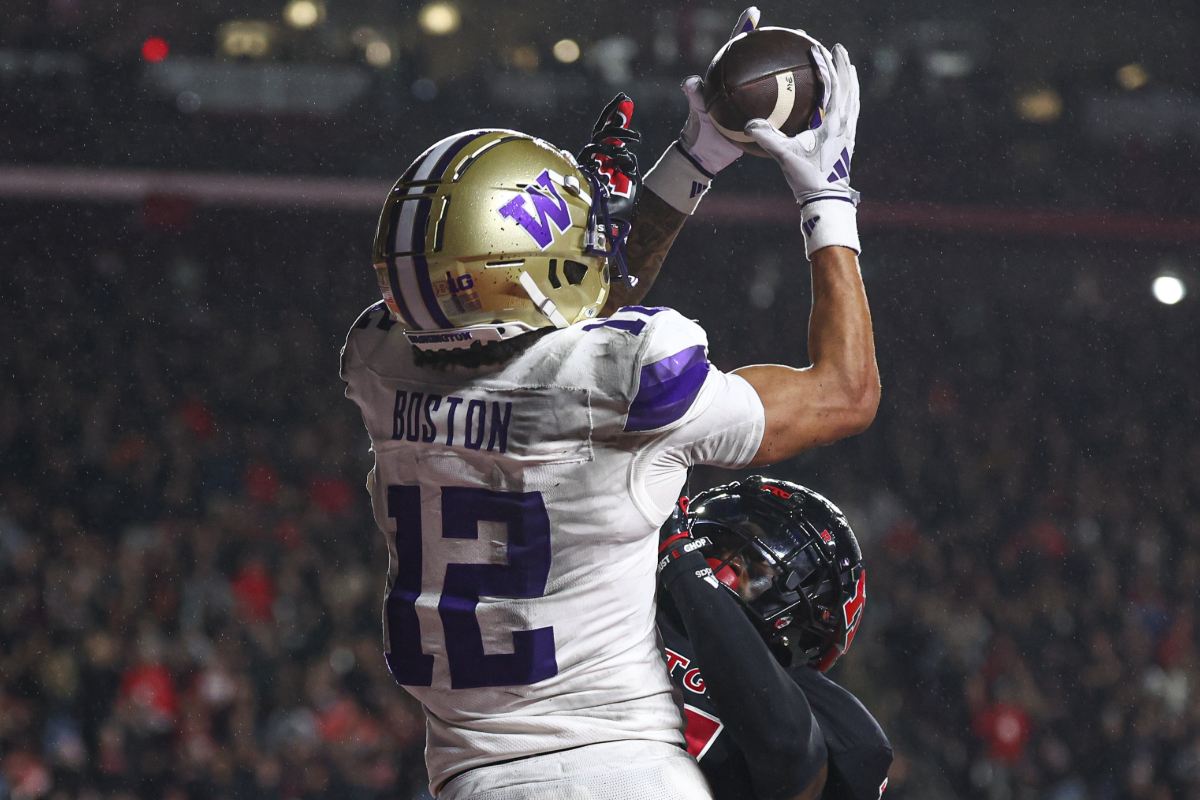
4. Denzel Boston (Washington Huskies)
Denzel Boston is a prototypical boundary receiver with NFL size, body control and competitive toughness to operate as a true X at the next level. He wins with strength, positioning and timing rather than sudden explosiveness, giving quarterbacks a reliable option in contested situations and high-leverage areas of the field. Boston’s game is built on physicality and nuance. While he may never profile as a true vertical burner, his ability to separate with technique and dominate at the catch point gives him a clear path to early NFL snaps.
Strengths
- Prototype boundary frame: Possesses ideal size and length for an NFL X receiver, creating natural advantages against smaller corners on the outside.
- Contested catch dominance: Consistently wins through contact by boxing out defenders and attacking the football at its highest point with strong hands and timing.
- Intermediate-area production: Thrives in the 15–25 yard range where his size, body control and understanding of leverage allow him to own space.
- Route discipline for size: More refined as a route runner than most big-bodied receivers, showing an ability to stem defenders and separate at the top of routes.
- Red-zone value: Presents a large, quarterback-friendly target near the goal line, winning fades and in-breaking routes with positioning and body control.
- Hands and catch technique: Catches the ball cleanly away from his frame, minimizing drops and maximizing his effective catch radius.
- Physical play demeanor: Willing and technically sound run blocker who seeks leverage and sustains engagement, adding value beyond the box score.
- Functional yards after catch: Not elusive, but decisive; gets vertical quickly and uses his frame to fall forward and finish runs.
Concerns
- Limited initial burst: Lacks sudden explosiveness off the line, allowing physical press corners to disrupt timing before he builds momentum.
- Change-of-direction efficiency: Requires extra steps to gear down on sharp-breaking routes, reducing separation on quick hitters.
- Press-man consistency: Can struggle against corners who match his physicality and challenge him early in the route.
- Route break definition: Occasional rounding at the top of routes can tip intentions to disciplined defenders.
- Top-end speed ceiling: Build-up speed is adequate, but he does not consistently threaten defenses vertically on pure speed alone.
Overall Evaluation
Evaluating his profile, Denzel Boston projects as a starting-caliber boundary receiver who brings immediate value as a possession target and red-zone weapon. Timing-based offenses that emphasize intermediate throws, leverage-based route concepts and physical receivers who can win in tight windows would best fit his skill set. He complements speed and space players well, giving an offense a physical presence that defenses must account for.
While he may never be a volume separator or explosive field-stretcher, Boston’s reliability, toughness and contested-catch ability create a strong floor. Quarterbacks will trust him when coverage tightens and windows shrink. With continued refinement in his release package and route detail, he has the upside to settle in as a long-term WR2 with situational WR1 utility. Bostion is someone who may not dominate headlines, but he consistently moves the chains and scores touchdowns.
5. Elijah Sarratt (Indiana Hoosiers)
A polished, dependable wide receiver prospect, Elijah Sarratt wins with intelligence, hands and body control rather than pure athleticism. He brings a quarterback-friendly skill set built around strong catch technique, route discipline and an advanced understanding of coverage, making him a reliable option in high-leverage situations. Sarratt’s game is rooted in efficiency and trust. He consistently shows up on third downs and in late-game moments, using feel for spacing and leverage to move the chains and finish drives.
Strengths
- Natural hands catcher: Plucks the football cleanly away from his frame with confidence, routinely securing catches in traffic and tight windows.
- Body control and adjustment ability: Tracks the ball well in the air and makes late, controlled adjustments, particularly on back-shoulder throws and contested targets.
- Intermediate-area weapon: Excels working between the numbers and near the sticks, consistently understanding where the first-down marker is and how to attack coverage leverage.
- Zone awareness: Shows advanced feel for finding soft spots, settling when needed, and staying friendly to the quarterback as plays extend.
- Crafted route runner: Separates with tempo, subtle head fakes, and controlled breaks rather than sudden explosiveness.
- Deceptive downfield effectiveness: While not fast, he times deep routes well and wins through tracking and positioning rather than raw speed.
- Chain-moving reliability: Converts a high percentage of targets into first downs or touchdowns, reinforcing his value as a possession receiver.
- Competitive demeanor: Willing run blocker who plays with edge and effort on the perimeter.
Concerns
- Limited vertical speed: Lacks the long speed to consistently threaten NFL defenses over the top or win foot races outside the numbers.
- Release versus press: Can struggle to gain clean releases against longer, physical corners due to modest burst off the line.
- Route tree expansion: Currently most comfortable on slants, curls, comebacks and verticals; adding nuance on in-breaking concepts would raise his ceiling.
- Yards-after-catch ceiling: Functional but unspectacular with the ball in his hands, unlikely to create explosive plays through elusiveness.
- Blocking consistency: Effort is there, but technique and hand placement need refinement against NFL-caliber defenders.
Overall Evaluation
Sarratt projects as a high-floor NFL receiver who can contribute early as a dependable possession target. He fits best in timing-based and zone-heavy offenses that emphasize precision, back-shoulder throws and receivers who can win late in the down. His skill set aligns well with quarterbacks who value trust and anticipation over raw separation.
While he may never profile as a true vertical X or explosive playmaker, Elijah Sarratt’s reliability, contested-catch ability and late-game composure give him a clear role at the next level. He profiles as a strong WR2 or high-end complementary starter who consistently moves the chains and earns quarterback trust. With continued refinement against press coverage, he has the tools to outplay his draft slot and become a long-term fixture in an NFL passing game.
6. Kevin “KC” Concepcion (Texas A&M Aggies)
Kevin “KC” Concepcion is a dynamic, versatile wide receiver who brings legitimate playmaking juice to an offense. He can win at all three levels, but his defining trait is what he does after the catch, turning routine completions into explosive gains with creativity, toughness and spatial awareness. Concepcion isn’t just a manufactured-touch player; while his usage has included motion, screens and designed touches, his development as a route runner and coverage reader has expanded his impact into the intermediate and vertical passing game.
Strengths
- Run-after-catch weapon: Dangerous in space with the agility and balance to make defenders miss and consistently add yards beyond what’s blocked.
- Strong, confident hands: Comfortable extending away from his frame and competing at the catch point despite a modest build.
- Route nuance and leverage awareness: Separates with pacing, head fakes and body manipulation rather than raw speed, particularly effective against zone coverage.
- Alignment versatility: Has produced both inside and outside, allowing offensive coordinators to move him around and dictate matchups.
- Competitive toughness: Plays with edge; fights through contact, finishes plays and does not shy away from traffic over the middle.
- Football IQ: Finds soft spots in coverage and understands spacing, consistently presenting clean throwing windows for his quarterback.
- Acceleration through breaks: Builds speed efficiently and maintains momentum when snapping off routes, particularly on digs, overs and crossers.
- Big-moment producer: Showed a tendency to rise in high-leverage situations, delivering when defenses were keyed on stopping him.
Concerns
- Limited size profile: At roughly 5’11” and under 190 pounds, he lacks the frame to win against physical NFL press corners consistently.
- Blocking consistency: Effort is there, but technique and functional strength need refinement to hold up on the perimeter.
- Vertical ceiling: Adequate speed, but not a true burner; unlikely to consistently stress defenses as a pure field-stretcher.
- Catch-point strength versus physical DBs: Can be displaced by longer corners, particularly when contact arrives early in the rep.
- Production volatility: Sophomore-year dip raised questions about consistency once defenses adjusted and schemed specifically to limit him.
Overall Evaluation
Projecting as a modern offensive chess piece, KC Concepcion is a receiver who can align across formations, stress defenses horizontally and vertically and create offense after the catch. He’s not a true alpha receiver and shouldn’t be forced into that role early. Instead, his value lies in versatility and efficiency: motion usage, slot deployment, intermediate route concepts and schemed touches that let his instincts take over. When used correctly, he elevates an offense’s flexibility and forces defenses to account for him on every snap.
His floor is a high-impact rotational receiver with immediate utility; his ceiling is a consistent starter who thrives as a primary slot option or movable Z. If Concepcion continues refining his route detail and adds functional strength, he has the tools to outperform his draft slot and become a reliable difference-maker at the next level.
7. Chris Bell (Louisville Cardinals)
A physically imposing wide receiver prospect, Chris Bell has rare size, speed and play strength, bringing true mismatch potential to an NFL passing attack. At 6’2” and 220 pounds with legitimate 4.4 speed, Bell looks the part of a modern power receiver. He earned First-Team All-ACC honors after a breakout 2025 season, hauling in 72 receptions for 917 yards and six touchdowns while functioning as the focal point of Louisville’s offense.
His season and draft momentum were cut short by an ACL tear suffered in December, an injury that will likely temper his immediate stock but not erase the appeal of his physical profile. Bell wins with a blend of strength, vertical speed and yards-after-catch violence that stresses defenses in multiple ways.
Strengths
- Size–speed profile: Rare build for the position; combines receiver length with running back mass and legitimate vertical speed that forces matchup adjustments.
- Physicality at the catch point: Comfortable playing through contact, boxing out defenders and finishing through collisions in contested situations.
- Vertical tracking: Tracks the football naturally downfield, adjusting late and maintaining focus even when contact arrives at the catch point.
- Run-after-catch ability: Transitions immediately from receiver to runner; erases pursuit angles and requires multiple defenders to bring him down.
- Release flashes: Shows moments of advanced tempo variation and footwork off the line, particularly when working against off coverage.
- Intermediate presence: Effective on curls, comebacks and in-breaking routes where his frame and deceleration create natural separation.
- Press stacking: When given clean releases, can stack defenders vertically and quickly force them into recovery mode.
Concerns
- ACL injury: December tear will push medical evaluations to the forefront and may delay early-career availability.
- Route tree development: Production is concentrated on verticals and select intermediate concepts; needs expansion and refinement.
- Short-area separation: Lacks elite twitch; doesn’t consistently create instant separation on quick-breaking routes.
- Mid-route disruption: Physical corners can knock him off timing within the stem, particularly against pressman looks.
- Hand consistency: Occasional double-catches and body-trapping show up on tape and will be challenged at the next level.
Overall Evaluation
Chris Bell projects as a high-upside power receiver whose success will hinge on health and refinement rather than raw tools. His combination of size, speed and physicality is exactly what NFL teams covet, especially in an era built around exploiting mismatches. He profiles best as a boundary X or big slot option who can work vertically, dominate intermediate windows and punish defenses after the catch.
The injury will likely slide him into the Day 2 range, but the appeal remains obvious. Bell is too big for nickel defenders and too fast for most boundary corners, creating coverage dilemmas that offensive coordinators love to exploit. He may not arrive as a fully polished route technician, but his physical traits give him a clear path to early snaps while his game continues to mature. If he regains pre-injury explosiveness, Chris Bell has the ceiling of a true primary receiver who tilts coverage and dictates matchups. At worst, he projects as a high-impact complementary weapon with starting-level upside. Teams willing to be patient with his recovery could be rewarded with one of the more physically dominant receivers in this class.
8. Chris Brazzell II (Tennessee Volunteers)
Chris Brazzell II is a rare movement-based receiver with prototype X-receiver length and the flexibility to win at all three levels of the field. At 6’5” with long strides and loose hips, Brazzell doesn’t move like a receiver built in a tight end’s body.
After transferring from Tulane, he emerged as Tennessee’s primary vertical and intermediate threat, flashing a combination of fluid route running, ball-tracking ability and deceptive separation skill that makes defensive backs uncomfortable from the snap. His background, which includes NFL bloodlines, shows up in how naturally he understands leverage, spacing and timing within routes. Brazzell wins with technique and body control more than raw speed, but the physical traits give him a ceiling few receivers can match.
Strengths
- Rare flexibility for size: Uncommon hip sink and bend for a 6’5” receiver; moves more like a smaller wideout than a true big body.
- Route separation skill: Creates space with tempo variation, shoulder fakes and efficient stems rather than relying solely on athleticism.
- Vertical tracking ability: Adjusts smoothly to the ball in flight, maintains focus through contact and finishes contested opportunities downfield.
- Acceleration out of breaks: Eats cushion quickly once defenders commit, forcing early hip turns and opening intermediate windows.
- Catch-point control: Attacks the football at its highest point with strong hands and coordinated body positioning.
- Zone awareness: Identifies soft spots quickly and throttles down with timing that helps quarterbacks stay on schedule.
- Functional YAC ability: Not a jitterbug, but shows balance, vision and forward momentum after the catch.
- Effort blocker: Willing and engaged on the perimeter, using length to wall off defenders rather than simply occupying space.
Concerns
- Lean frame: At roughly 200 pounds, durability and play strength are legitimate questions, especially following prior shoulder issues.
- Top-end speed: Builds speed smoothly but doesn’t consistently stack corners in pure vertical foot races.
- Focus drops: Occasional lapses on routine catches when transitioning too quickly to runner mode.
- Press-hand combat: Can get grabby against physical corners; needs cleaner footwork and trust in releases.
- Route precision: Can drift on comebacks and curls, giving defenders recovery windows at the break point.
Overall Evaluation
Profiling as a developmental X receiver, Chris Brazzell II has starting upside and schematic versatility. His value lies in his ability to stress coverage vertically while still providing separation underneath, a combination that fits naturally in offenses built around play-action, intermediate concepts and boundary-isolation routes.
He isn’t a pure burner, and he isn’t a dominant after-the-catch weapon, but his ability to win with technique, size and timing gives him a clear path to early snaps. The durability questions and lean frame will keep some teams cautious, but those concerns are manageable with strength development and proper usage. If Brazzell adds functional mass without sacrificing his rare fluidity, he has the tools to develop into a reliable WR1-type presence who dictates coverage and creates matchup problems on the outside. More realistically, he projects early as a high-end WR2 with the ceiling to grow into more as his route detail and physical strength continue to improve.
9. Zachariah Branch (Georgia Bulldogs)
A dynamic, speed-driven offensive weapon, Zachariah Branch brings game-breaking acceleration, open-field creativity and immediate special teams value to an NFL roster. As a compact and explosive receiver, Branch wins with burst, long speed and instinct rather than size or physical dominance. His ability to stress defenses horizontally and vertically shows up immediately on tape, particularly when he’s given space to operate from the slot, on motion concepts or in the return game.
Branch’s background as a high-end athlete is evident in how quickly he processes space with the ball in his hands and how rapidly he can turn routine touches into explosive gains. While his raw athleticism will translate immediately, his overall profile is more specialized than some of the league’s prototypical top targets, placing added importance on usage, role and offensive design at the next level.
Strengths
- Explosive acceleration: Reaches top speed in a few steps, forcing defensive backs to respect vertical threats and opening space underneath.
- Elite long speed: Once in the open field, consistently outruns pursuit angles and turns missed tackles into chunk plays.
- Stop-start quickness: Sudden deceleration and re-acceleration create separation on comebacks, option routes and double moves.
- Open-field vision: Processes leverage and pursuit like a ball carrier, not just a receiver, maximizing yards after the catch.
- Ball adjustment ability: Tracks the football well and shows flexibility to adjust to off-target throws without losing balance.
- Return-game impact: Proven punt return threat with patience, burst and feel for blocking angles; adds immediate roster value.
- Competitive at the catch point: Plays tougher than his frame suggests, willing to fight through contact despite size limitations.
- Reliable hands: More dependable catching through traffic than many speed-first receivers.
Concerns
- Undersized frame: At roughly 5’10” and 175 pounds, size limits his margin for error against physical press coverage.
- Role-dependent skill set: Projects best from the slot or on manufactured touches rather than as a full-time boundary receiver.
- Developing route tree: Still learning to create separation with technique rather than relying on speed advantages.
- Contact disruption: Physical corners can knock him off timing at the top of routes and shrink throwing windows.
- Blocking limitations: Effort is there, but strength and technique cap his effectiveness in the run game.
- Durability questions: His lean frame and a brief missed time raise concerns about long-term physical sustainability.
Overall Evaluation
Zachariah Branch projects as an immediate contributor in specialized offensive packages and as a high-impact returner, with the upside to grow into a featured slot weapon. His explosiveness forces defensive adjustments, and his ability to create after the catch gives offensive coordinators a tool to manufacture production even when separation isn’t clean. He is unlikely to develop into a traditional outside X receiver who consistently wins against press or dominates at the catch point. Still, that limitation doesn’t diminish his value in modern offenses that prioritize spacing, motion and mismatches.
The teams that will get the most out of Branch are those willing to be intentional with his deployment rather than forcing him into a conventional receiver role. His ceiling is tied closely to creativity and usage, while his floor is supported by elite speed and special teams value. In the right system, Zachariah Branch can become a high-impact complementary piece who tilts coverage, creates explosive plays and changes games without needing volume-heavy usage.
10. Germie Bernard (Alabama Crimson Tide)
Germie Bernard is a polished, dependable wide receiver prospect who wins with intelligence, route detail and reliability rather than with overwhelming athleticism. A versatile target with experience across multiple alignments, Bernard brings value as a chain-mover who understands spacing, timing and how to stay quarterback-friendly in critical situations. His game is built on precision and trust, making him a natural fit for offenses that value execution over flash. His combination of route awareness, strong hands and positional flexibility gives him a high floor at the next level, even if his ceiling is more muted compared to some of the explosive athletes in this class.
Strengths
- Route running precision: Consistently creates separation in the short and intermediate areas using subtle head fakes, pacing and clean breaks rather than raw speed.
- Reliable hands: Plucks the ball cleanly away from his frame and shows confidence catching through contact, particularly on third downs and in traffic.
- Football intelligence: Displays advanced feel for zone coverage, locating soft spots and adjusting routes instinctively to stay available for the quarterback.
- Contested catch ability: Plays bigger than his listed size with strong body control and timing along the boundary and over the middle of the field.
- Ball tracking: Adjusts naturally to throws in flight, maintaining balance and focus on deep and intermediate targets despite average long speed.
- Alignment versatility: Has lined up outside, in the slot and in motion without a noticeable drop-off, allowing offenses to move him around for matchup advantages.
- YAC efficiency: Transitions quickly from receiver to runner, gaining extra yards through decisiveness and physicality rather than elusiveness.
Concerns
- Top-end speed: Lacks true vertical burst to consistently separate downfield, which limits his ceiling as a pure field-stretcher.
- YAC ceiling: Effective but not dynamic after the catch; unlikely to generate explosive plays through broken tackles or sudden lateral movement.
- Functional strength versus press: Can be disrupted by physical, handsy corners at the line of scrimmage and needs to continue adding play strength.
- Blocking technique: Willing contributor in the run game, but hand placement and sustain need refinement against NFL-caliber defenders.
Overall Evaluation
Looking to the future, Bernard projects as a reliable secondary target who can step into an NFL rotation early and earn trust quickly. His value comes from doing the small things well: finding space, converting third downs and staying consistent snap to snap. He may never be a true alpha receiver, but his polish and football IQ give him a clear path to meaningful playing time.
In the right offense, Germie Bernard profiles as a strong WR2/WR3 who complements a primary playmaker and keeps the chains moving. His floor is solid due to his technical skill set and mental approach, and while his athletic limitations cap the upside, he’s the type of receiver coaches trust when the play has to work.
Notable Other Wide Receivers
- Skyler Bell (UConn Huskies): Skyler Bell projects as a role-specific receiver best suited for slot or Z usage in three-receiver sets. His speed, route detail and spatial awareness give him value as a chain-mover and spacing piece rather than a volume target.
- Omar Cooper Jr. (Indiana Hoosiers): Projecting as a Day 2 or early Day 3 receiver, Omar Cooper Jr.’s value comes from physicality, yards after catch and competitive toughness rather than refined route artistry. His game fits best in offenses that prioritize motion, RPO concepts, crossers and quick-strike designs that get the ball into his hands early and let him create after the catch.
- Deion Burks (Oklahoma Sooners): Deion Burks has the profile of a role-specific offensive weapon rather than a complete wide receiver. His best early NFL usage will come as a slot receiver, motion player and manufactured-touch option who can stress defenses horizontally and vertically without being asked to win through contact consistently.
- Bryce Lance (North Dakota State Bison): Bryce Lance projects as a possession-oriented outside receiver whose value lies in reliability, physical finishes and situational effectiveness rather than dynamic separation. His best early usage comes as a complementary X receiver who can convert third downs, win in the red zone and provide quarterbacks with a trustworthy target when windows shrink.
- Kevin Coleman Jr. (Missouri Tigers): Projecting as a slot-focused receiver, Kevin Coleman Jr. thrives on timing, separation and intelligence rather than physical traits. His best NFL usage would come in three-receiver sets where he can attack linebackers and nickel defenders, work underneath zones and serve as a dependable chain-mover.
- Ted Hurst (Georgia State Panthers): A developmental outside receiver, Ted Hurst has rotational upside, particularly in passing situations where his size, hands and route feel can be leveraged. He fits best in offenses that use motion, stacked alignments and route combinations to create free releases, allowing him to work into space rather than win consistently through contact.
- Barion Brown (LSU Tigers): Barion Brown profiles as a specialized offensive weapon with immediate special teams value and situational offensive impact. His speed alone gives him a role in the league, particularly for teams looking to add explosive elements to their offense and return units.
- Malachi Fields (Notre Dame Fighting Irish): Projecting as a developmental boundary receiver with possession and red-zone value at the next level, Malachi Fields’ size, hands and contested-catch skill set give him a clear role as an outside target who can move the chains and win in tight windows.
- Ja’Kobi Lane (USC Trojans): Ja’Kobi Lane is a red-zone and possession receiver whose value increases as the field shrinks. His contested catch skill set, body control and spatial awareness give him immediate utility as a situational target on third downs and scoring plays.
More 2026 NFL Draft Content
- The Top 5 Rookie Quarterbacks for the 2026 NFL Draft
- The Top 7 Rookie Running Backs for the 2026 NFL Draft

Thanks for reading about my Top 10 Rookie Wide Receivers for the 2026 NFL Draft! For more Devy and College Fantasy Football content, follow me on Twitter/X @PoshplaysFF.
*Photo Credit: Vincent Carchietta – USA TODAY Sports*
