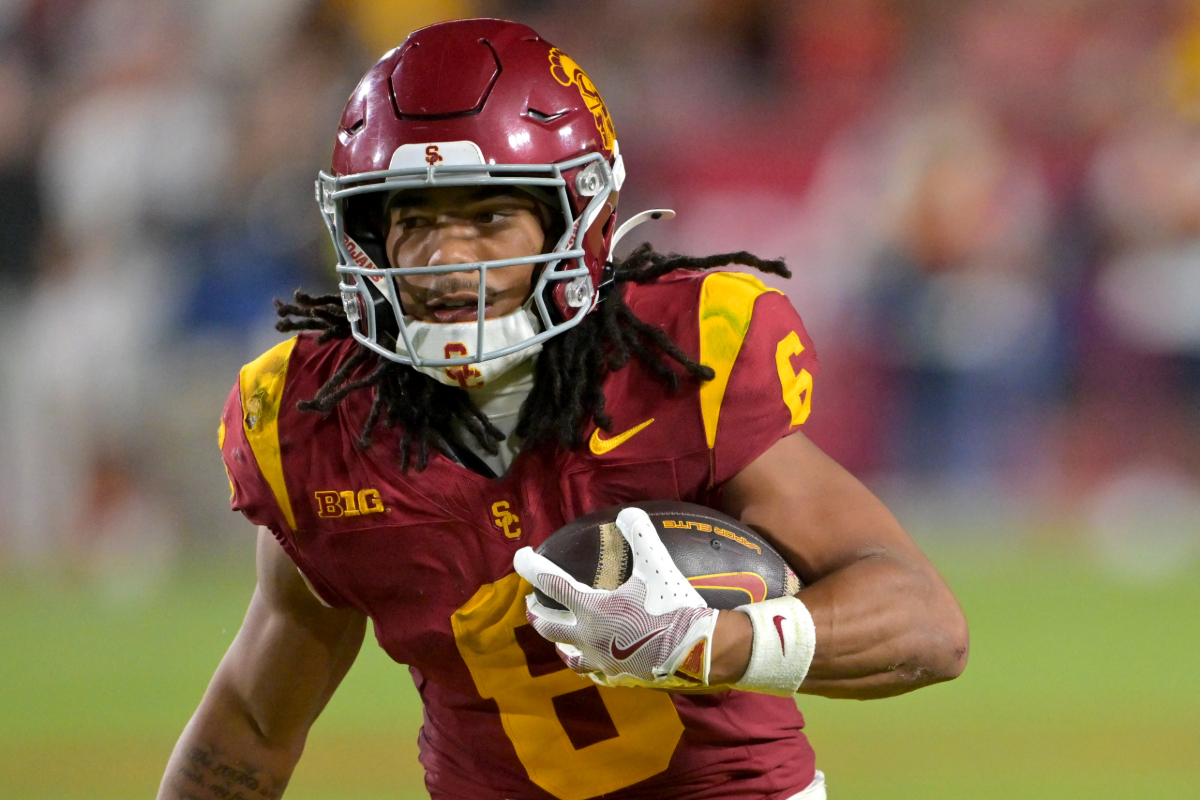
We’re officially less than a month away from the 2026 NFL Draft, and the landscape of this rookie class has shifted quite a bit since my mid-season mock back in October. With the NFL Scouting Combine and Pro Days now behind us, we have a much clearer picture of where this class stands, and more importantly, where it falls short.

Pre-NFL Draft 2026 Dynasty Rookie Mock Draft | Superflex, TE Premium
Why a Pre-NFL Draft 2026 Mock Draft?
In April 2025, I released a “way-too-early” 2026 rookie mock draft. It served as a useful thought exercise, helping dynasty players familiarize themselves with names, research trajectories and project player upside on paper. In October 2025, I released a “mid-season mock” and reviewed how the landscape had shifted.
Now, as we hone in on our rookie drafts, armed with our picks, we can dig a little deeper into the current landscape before the NFL Draft, when final changes will take place to reflect landing spots.
Updated Thoughts on the 2026 Class
Quarterbacks
The biggest change? Quarterback optimism has cooled significantly. Back in October, there was hope that this class could still produce multiple Day 1-caliber quarterbacks. Fast forward to now, and it looks far more likely that we get just one, maybe two signal-callers with true first-round draft capital. That reality forces a shift in strategy, especially in Superflex formats where quarterbacks are typically king.
But here’s the stat that really puts things into perspective. Between 2015 and 2024, 66 quarterbacks were selected in Rounds 2–7. Of those 66, only five have gone on to start at least 32 NFL games: Dak Prescott, Brock Purdy, Jalen Hurts, Jacoby Brissett and Gardner Minshew. That’s just five out of 66. And realistically, only three, Prescott, Purdy and Hurts, have become true long-term starters. The others have settled into journeyman roles. Even if you want to project names like Malik Willis or Tyler Shough into that conversation down the line, they haven’t met that threshold yet.
The takeaway is simple: outside of Round 1, quarterback hit rates are brutally low. Roughly 92% of Day 2 and Day 3 quarterbacks never become long-term starters, and that’s before you even factor in the bust rate of first-rounders. So while Superflex formats naturally push us toward prioritizing quarterbacks, this is not the class to force it.
Wide Receiver
Instead, this mock leans heavily into wide receiver. The running back group lacks true difference-makers; while there are useful pieces, it’s not a class loaded with league-winning upside. At receiver, however, there’s depth, versatility and multiple players who project as strong contributors at the next level.
In a class without many home run swings, the goal shifts: take the singles and doubles. Stack players who can earn roles, command targets and provide consistent value over time.
RELATED: Ranking the 2026 College Football Quarterbacks Using “The Bill Parcells Rules”
First Round Pre-NFL Draft 2026 Dynasty Rookie Mock Draft
1.01: Jeremiyah Love (RB, Notre Dame Fighting Irish)
Simply put, Jeremiyah Love is the best player in this class. While Superflex formats typically push quarterbacks up the board, his elite pass-catching running back profile makes him just as valuable, if not more, in Points Per Reception (PPR) leagues. Love projects as an immediate difference-maker with three-down upside, bringing a rare combination of home-run speed, vision and receiving ability. He accelerates instantly, creates in space and consistently turns routine touches into explosive plays.
What separates Love is his natural feel as a pass-catcher, giving him a path to high-volume usage in modern NFL offenses. In 2025, he dominated with 1,372 rushing yards, averaging 6.9 Yards Per Catch (YPC) and adding 18 touchdowns, plus 27 receptions and three scores through the air. In a class lacking elite ceilings, Jeremiyah Love is one of the few players who can truly tilt fantasy matchups.
1.02: Fernando Mendoza (QB, Indiana Hoosiers)
At this point, it feels inevitable that Fernando Mendoza will be the face of the Las Vegas Raiders. The Heisman winner and national champion has all the momentum to go 1.01, and everything coming out of the pre-draft process points to him landing in Vegas as their franchise quarterback.
Mendoza wins with poise, processing and high-level anticipation. At 6’ 5”, he brings prototypical size along with advanced pocket feel, consistently delivering on time while working through progressions with ease. He thrives in structure, keeps offenses on schedule and has repeatedly shown the ability to rise in big moments. His arm talent may not be elite, but it’s more than enough when paired with his accuracy and decision-making. In Superflex, projected opportunity is everything, and Mendoza should get it immediately. In a class lacking quarterback certainty, Fernando Mendoza is the clear best bet to become a long-term NFL starter.
1.03: Jordyn Tyson (WR, Arizona State Sun Devils)
Ask six different dynasty analysts how to rank this next tier of three wide receivers and you’ll likely get six different answers. All are defensible, but Jordyn Tyson is my guy. Even with a pre-draft process impacted by injuries, he offers the highest ceiling in this range with a skill set that can develop into true WR1 production.
Tyson plays with polish, intelligence and reliability. He’s an advanced route-runner who consistently creates separation through pacing, leverage and technique rather than raw speed. His ability to find soft spots in coverage and operate across multiple alignments makes him a quarterback-friendly target from day one. While he may lack elite top-end speed, he compensates with body control, ball tracking and toughness at the catch point. If he clears medically, Jordyn Tyson profiles as a long-term starter with the upside to become a volume-driven fantasy asset in PPR formats.
1.04: Carnell Tate (WR, Ohio State Buckeyes)
Picking Carnell Tate here feels like the safest move on the board. Coming out of the Ohio State pipeline, he profiles as a pro-ready receiver with a high floor and a clear path to early production. If you’re looking to avoid risk in this tier, Tate is the steady, dependable choice.
Winning with polish, body control and strong hands rather than elite athletic traits, Tate is a smooth route-runner who understands pacing and leverage, consistently creating separation in the intermediate areas. His ball skills and ability to track the football make him a reliable option at all levels of the field. Though he may lack top-end speed, his football IQ and catch-point consistency allow him to thrive in structured passing offenses. Carnell Tate projects as a quarterback-friendly target who can contribute early and grow into a dependable weekly fantasy option, particularly in PPR formats.
1.05: Makai Lemon (WR, USC Tojans)
If you land Makai Lemon at 1.05, it’s no consolation prize. He is the final player in a clear top tier, and unless you have a strong preference elsewhere, the smart move is to stay put and secure him before the drop-off.
Lemon is intelligent, reliable, and technically refined. He’s a natural separator who understands leverage and consistently finds space, particularly from the slot. His hands are among the most dependable in the class, making him a quarterback’s best friend in high-traffic situations. While he lacks elite size or explosiveness, he compensates with route detail, body control and strong awareness against zone coverage. Projecting as an immediate contributor in timing-based offenses, Makai Lemon has a high floor as a chain-moving PPR asset. In a class without many sure things, he offers one of the safest paths to consistent fantasy production.
1.06: Kenyon Sadiq (TE, Oregon Ducks)
Sitting in a tier of his own, Kenyon Sadiq is the clear TE1 in this class and an easy selection in tight end premium (TEP) formats. His receiving profile gives him a significant positional advantage, making him one of the most valuable non-quarterbacks on the board at this stage.
A dynamic, movement-based tight end, Sadiq creates mismatches all over the formation. He brings legitimate seam-stretching speed, fluid athleticism and strong ball skills, allowing him to win against linebackers and defensive backs alike. Oregon maximised his versatility, frequently deploying him in the slot or split wide to take advantage of his receiving ability. Although his blocking remains a work in progress, that won’t limit his early fantasy impact. Kenyon Sadiq projects as a featured receiving option with the upside to become a focal point in the passing game, and in TEP formats, that ceiling is worth chasing.
1.07: Omar Cooper Jr. (WR, Indiana Hoosiers)
Talk about a meteoric rise! Omar Cooper Jr. wasn’t even a second-round selection in my mid-season mock, but this isn’t an overcorrection, as he’s earned this jump. Cooper broke out in a big way and, more importantly, showed a skill set that translates and sticks at the next level.
His game is built on toughness, strong hands and yards-after-catch ability. Cooper consistently finishes through contact and turns short throws into chunk gains with impressive balance and physicality. He’s a competitive, high-effort player who thrives over the middle and brings versatility with the ability to line up inside or outside. His route-running still needs some refinement, but his play strength and yards-after-catch (YAC) ability give him a clear early role in NFL offenses. Projecting as a high-volume contributor in the right scheme, Omar Cooper Jr. has the upside to develop into a reliable WR2 for fantasy.
1.08: Kevin “KC” Concepcion (WR, Texas A&M Aggies)
Another wide receiver in that late Day 1 to early Day 2 range, Kevin “KC” Concepcion brings an added layer of value depending on your league settings. If you get points for return yards, he gets a clear bump; he’s one of the best returners in this class and can contribute immediately in multiple phases.
As a receiver, Concepcion is a dynamic playmaker who thrives after the catch. He consistently turns short completions into explosive gains with agility, balance and strong spatial awareness. His route-running has developed nicely, allowing him to win at all three levels rather than being limited to schemed touches. Concepcion’s size limits his ability against physical corners, but his versatility and football IQ create a clear role early. KC Concepcion projects as a high-usage slot weapon with built-in upside through manufactured touches and special teams production.
1.09: Eli Stowers (TE, Vanderbilt Commodores)
Depending on your league’s TEP settings, don’t be surprised if Eli Stowers goes even higher than this. There’s a real argument to take him over the previous receivers, but I’d slot him in just behind them. For fantasy purposes, however, Stowers is essentially a wide receiver with tight end eligibility, and that’s incredibly valuable.
A former quarterback, Stowers brings rare movement skills and natural ball-tracking ability to the position. He’s a vertical seam threat with strong hands and the ability to create after the catch, making him a constant mismatch against linebackers and safeties. His alignment versatility allows him to be deployed all over the formation. While his in-line blocking is still developing, that won’t limit his fantasy appeal. Eli Stowers looks to be a receiving-focused weapon with real upside to become a difference-maker in TEP formats.
1.10: Antonio Williams (WR, Clemson Tigers)
Antonio Williams might be the best receiver in this class that nobody is talking about. His pre-draft process has been quiet, but don’t be surprised if this looks like a steal in hindsight. At 1.10, this is exactly the type of “singles and doubles” pick that builds long-term dynasty value.
Winning with polish, intelligence and consistency, Williams is one of the most refined route runners in the class, creating separation through tempo, leverage and sharp breaks rather than raw speed. His strong hands and body control make him a reliable option, particularly over the middle of the field. Although he lacks elite size or explosiveness, his ability to separate and understand coverage gives him a clear path to early playing time. Antonio Williams projects as a high-floor PPR asset who can quickly become a quarterback’s trusted target.
1.11: Jonah Coleman (RB, Washington Huskies)
At this stage, I’m comfortable circling back to running back and targeting a player who can earn a role early with the upside to lead a backfield. Jonah Coleman fits that profile perfectly, as a steady, reliable runner whose game translates cleanly to the NFL.
Coleman wins with vision, balance and consistency rather than elite athleticism. He’s a compact, physical back who consistently maximises his blocking, falling forward and grinding out tough yardage between the tackles. His patience in zone schemes and ability to find cutback lanes make him an easy fit in modern rushing attacks. Despite lacking top-end speed, he offers enough burst and receiving ability to stay on the field. Profiling as a high-floor contributor who can develop into a dependable lead option in the right situation, Jonah Coleman will be particularly in volume-driven backfields.
1.12: Ty Simpson (QB, Alabama Crimson Tide)
This is where you take your swing. If you’re picking at 1.12, you’re likely coming off a championship roster and can afford to stash upside rather than chase immediate production, and Ty Simpson is exactly that kind of bet.
A polished, high-IQ quarterback with advanced processing and strong command of an offense, Simpson wins with timing, anticipation and pocket presence, consistently operating within structure and delivering accurate throws at all levels. His football background shows up in how he reads defenses and controls the game. The concern, however, is experience. With a limited sample size and some late-season inconsistency, there’s risk baked into the profile. His arm talent is solid but not elite, meaning the situation will matter. Ty Simpson’s ideal outcome is a stable landing spot where he can develop before starting. If that happens, the upside is worth the gamble.
Second Round Pre-NFL Draft 2026 Dynasty Rookie Mock Draft
2.01: Denzel Boston (WR, Washington Huskies)
Denzel Boston feels like a classic case of prospect fatigue. His stock may be cooling slightly, but this is exactly the range where you target reliable contributors with clear NFL roles, and Boston fits that perfectly.
As a prototypical boundary receiver, he wins with size, body control and physicality. Boston consistently dominates at the catch point and thrives in contested situations, making him a quarterback-friendly option, especially in the red zone and intermediate areas. He may lack elite burst or top-end speed, but his route discipline and toughness give him a strong floor. Denzel Boston projects as an outside receiver who can produce early and provide weekly fantasy value, particularly in touchdown-heavy formats.
2.02: Elijah Sarratt (WR, Indiana Hoosiers)
Elijah Sarratt fits a very similar mould to Denzel Boston, just without the same level of prospect fatigue. He’s a polished, dependable receiver who wins with intelligence, hands and body control rather than athletic upside. Sarratt is a quarterback-friendly target who thrives in the intermediate areas, consistently finding space and moving the chains. His strong hands and ability to adjust at the catch point make him reliable in tight windows and high-leverage situations.
While he lacks top-end speed and YAC explosiveness, Elijah Sarratt’s route discipline and feel for coverage give him a high floor. He looks to become a steady possession receiver who can earn targets early and provide consistent PPR value.
2.03: Chris Brazzell II (WR, Tennessee Volunteers)
The classic “first off the bus” prospect, Chris Brazzell II looks the part immediately. His traits are tantalising, but this is a profile with risk baked in. Low floor, high ceiling. If he hits, you could be looking at one of the steals of the draft.
At 6’ 5”, Brazzell moves with rare fluidity for his size, showing the ability to separate, track the ball and win at the catch point. He offers true outside receiver upside with the tools to develop into a matchup problem. The concerns come with consistency, play strength and refinement. But at this point in the draft, betting on traits makes sense, and Chris Brazzell has plenty of them.
2.04: Jadarian Price (RB, Notre Dame Fighting Irish)
Jadarian Price never led his own backfield in college, but sharing touches with Jeremiyah Love will do that. For dynasty, however, the lighter workload could be a positive, with less wear and tear at a position where longevity is hard to find.
Price brings explosive playmaking ability, with true home-run speed and strong contact balance. He’s a decisive runner who can create chunk gains quickly, while also offering value as a pass-catcher and returner. There are questions around pass protection and injury history, though that was 2023, but the upside is clear. Jadarian Price projects as an immediate rotational back with the potential to carve out a larger role in a committee and deliver spike-week fantasy production.
2.05: Germie Bernard (WR, Alabama Crimson Tide)
This is where the value of this wide receiver class really starts to show. Germie Bernard may not have elite traits, but he’s the type of player who can easily outperform his draft slot and become a reliable fantasy contributor.
Winning with polish, intelligence and consistency, Bernard is a clean route-runner with strong hands and a natural feel for coverage, making him a quarterback-friendly option who thrives in key situations. His versatility allows him to line up across the formation and earn snaps early. While his athletic ceiling is limited, his floor is high. Germie Bernard profiles as a steady PPR option who can carve out a meaningful role and quietly deliver consistent production.
2.06: Bryce Lance (WR, North Dakota State Bisons)
I love Bryce Lance, and it feels like the rest of the fantasy community is finally catching up. He’s been producing at a high level for a couple of seasons, and this is the kind of pick that could look like a steal a year from now.
Lance wins with physicality, strong hands and contested catch ability. He’s a red-zone weapon who consistently finishes through contact and gives quarterbacks a reliable option when windows tighten. His game is built on toughness and ball skills rather than separation, however the concerns around his level of competition are real. But the production and freakish combine performance speaks louder. Bryce Lance can become a possession receiver with touchdown upside and has a clear path to carving out a role early.
2.07: Mike Washington Jr. (RB, Arkansas Razorbacks)
Mike Washington Jr. brings one of the more intriguing size-speed profiles in this class. At 6’ 2” and 223 pounds with legit burst, he has the tools to be a downhill force who can also rip off explosive runs when he gets to the second level.
The SEC product thrives in north-south concepts, hitting lanes decisively and finishing runs with physicality. Washington backs it up, showing he can handle tough competition and still produce efficiently. The risk comes with ball security and limited passing-down polish, which could cap his early role. Still, at this point in the draft, betting on traits and opportunity makes sense. Mike Washington Jr. projects as a high-upside rotational back with potential to grow into more.
2.08: Chris Bell (WR, Louisville Cardinals)
Chris Bell was in the middle of a breakout season before a December ACL tear, and this feels like a classic draft-day discount. If you’re a contender picking here, this is the type of upside swing that can pay off in a big way.
At 6’2”, 220 pounds with legit speed, Bell brings a rare size-speed combination. He wins with physicality, contested-catch ability and strong run-after-catch production, making him a true mismatch weapon when healthy. His injury will likely delay his impact, but the talent is undeniable. Chris Bell profiles as a high-upside stash and if he returns to form, he could become a difference-maker as a fantasy receiver.
2.09: Zachariah Branch (WR, Georgia Bulldogs)
One of the most electric players in this class, Zachariah Branch is a true “touch it and it’s gone” weapon. He’s incredibly fun to watch, but his profile has real questions around size, durability and role. At 2.09, though, he’s absolutely worth the shot.
Branch wins with elite acceleration and open-field ability, capable of turning routine touches into explosive plays. He also brings added value as a returner, which could get him on the field early. But the concern is usage; he’ll need a creative offense to maximise his skill set rather than being forced into a traditional role. If that happens, Zachariah Branch has the upside to be a weekly difference-maker in flashes.
2.10: Emmett Johnson (RB, Nebraska Cornhuskers)
This is where the running back value pocket really begins. From here into the third round, you’re betting on traits and potential and letting landing spot dictate the final order. Emmett Johnson fits that mould perfectly.
A smooth, agile back, Johnson wins with vision, patience and lateral quickness. He’s a true three-down profile, with proven receiving ability that adds immediate fantasy appeal in PPR formats, and his ability to make defenders miss and create in space stands out. He lacks elite size and top-end speed, which may cap his workload, but the skill set is clean. Emmett Johnson projects as a versatile committee back with upside to grow into a larger role in the right system.
2.11: Nicholas Singleton (RB, Penn State Nittany Lions)
I told you so. From the moment Nicholas Singleton arrived at Penn State, he was hyped as the next big thing. He isn’t and I don’t even think he was the best back on his college team. That said, the physical tools are undeniable, and at this point, he’s worth the swing.
Singleton is a size-speed freak with explosive burst and home-run ability. When things are blocked cleanly, he can look dominant and rip off big plays with ease. He also brings some receiving upside, adding to the appeal. But the issue is consistency; his vision and feel as a runner lag behind his traits, making this a projection pick. At 2.11, however, betting on the elite athleticism of Nicholas Singleton is a gamble worth taking.
2.12: Justin Joly (TE, NC State Wolfpack)
Rounding out the draft, Justin Joly is a nice way to add value at tight end in TEP formats. He may not have elite upside, but he offers a well-rounded skill set that can translate to early usage.
As a smooth, reliable receiving option, Joly wins with hands, route awareness and positioning. He consistently finds space against zone coverage and provides a dependable target in key situations, particularly in the red zone. While he lacks top-end explosiveness and is still developing as an in-line blocker, his versatility gives him a clear path to snaps. Justin Joly projects as a steady TE2 with the potential to grow into a larger role in passing situations and will thrive in a landing spot that utilises heavy 12 personnel.
Looking Ahead at the 2026 Rookies
I’ll revisit this mock immediately after the NFL draft to capture the final shifts in draft capital and landing spot opportunity. Until then, stay plugged in and get to know all the prospects by position group as I release my rookie scouting profiles.
Who is your favorite pick in this 2026 mock? Who feels too high or too low? Let’s hear it in the comments!
More 2026 NFL Draft Content
- The Top 5 Rookie Quarterbacks for the 2026 NFL Draft
- The Top 7 Rookie Running Backs for the 2026 NFL Draft
- The Top 10 Rookie Wide Receivers for the 2026 NFL Draft
- The Top 7 Rookie Tight Ends for the 2026 NFL Draft

Thanks for reading my “Pre-NFL Draft 2026 Dynasty Rookie Mock Draft.” For more Devy and College Fantasy Football content, follow me on Twitter/X @PoshplaysFF.
*Photo Credit: Jayne Kamin-Oncea- USA Today Sports*
