Ah, the sweet anarchy of the College Football Playoff selection.
The secret the sport keeps pretending isn’t true is that, despite the blueprint, the process is still drenched in subjectivity. With 12 teams, seven at-large bids and no hard automatic qualifiers beyond Conference Champions ranked high enough, the door is wide open for interpretation. This season was never about who deserved it. It was about who the committee could justify.
This week brings no games to preview. Instead, it brings resentment, debate and long-term devy implications that may ripple for years. Let’s look ahead at what to expect from the teams and players in the College Football Playoff, as well as the biggest snubs.

2025 College Football Playoff Preview: Best Bets & Devy Fantasy Football Storylines
How the CFP Selection Process Actually Works
The 12 teams in the College Football Playoff are determined using a hybrid model that combines automatic bids and at-large bids chosen by the selection committee.
Automatic Bids (5 teams)
- The five highest-ranked Conference Champions
- Includes Power Four and Group of Five conferences
- No conference receives an automatic berth by default
At-Large Bids (7 teams)
- The next seven highest-ranked teams, regardless of conference
- Conference Championship participation is not required
Seeding & Byes
- Teams are seeded 1 through 12
- The top four Conference Champions earn first-round byes
- Seeds 5 through 12 compete in the opening round
Home-Field Advantage
- First-round games are played on campus at the higher seed
- Quarterfinals and semifinals rotate through NY6 bowl sites
- The National Championship title game is played at a neutral venue
What the Committee Evaluates
- Win-loss record
- Strength of schedule
- Head-to-head results
- Conference Championships
- Results against common opponents
None of those categories are weighted publicly, and that is where the chaos begins. The 12-team CFP was supposed to reduce controversy. Instead, it redistributed it. The margins are thinner, the arguments louder and the consequences bigger than ever. Welcome to the new era.
The Field & Current National Title Odds
- Ohio State +220
- Indiana +290
- Georgia +550
- Oregon +750
- Texas Tech +900
- Texas A&M +1700
- Alabama +2200
- Miami +2200
- Ole Miss +2200
- Oklahoma +4500
- James Madison +70000
- Tulane +75000
Best Bets to Win the National Championship
Safe Bet: Ohio State Buckeyes (+220)
Ohio State has the most complete roster in the field, elite depth at premium positions and the shortest path to a championship from a matchup standpoint. The Buckeyes combine top-end devy talent with defensive consistency and postseason experience. They are priced correctly at this number, following last weekend’s Big Ten Championship loss, but it still offers value given their floor.
Mid-Range Bet: Georgia Bulldogs (+550)
Georgia is not as dominant as past versions, but it is battle-tested, physically imposing and constructed for playoff football. The Bulldogs are capable of winning multiple styles of games and rarely beat themselves. At over 5-to-1 odds, this is the best balance of price and upside in the market.
Dark Horse Bet: Texas Tech Red Raiders (+900)
Texas Tech is the better dark horse for this field. The Red Raiders are built in a way that translates well to playoff football, with elite defensive efficiency, a disruptive pass rush and a secondary that can play man coverage without constant help. In a bracket setting, that matters more than raw offensive firepower. Texas Tech does not need to win shootouts to advance.
They are also underrated because the offense is perceived as limited. That is partially true, but it is also misleading. Texas Tech controls tempo, protects the football and capitalizes on short fields created by its defense. That profile is dangerous in single-elimination games. At +900, Texas Tech offers a far better blend of price and plausibility than most longshots. They may not dominate opponents, but they are well equipped to frustrate favorites and grind out wins in a playoff environment.
How the ACC Nearly Sabotaged Its Own CFP Case
The ACC came dangerously close to torpedoing itself.
With 17 teams, no divisions and only eight conference games, the league produced a five-way tie at 6-2 that exposed the flaws of its structure. Head-to-head results became irrelevant. Balanced scheduling did not exist. Duke reached the ACC Championship Game through strength-of-schedule tiebreakers, despite avoiding Pitt and SMU and losing to Georgia Tech.
Duke entered the title game at 8-5 overall. An ACC Championship was never going to put the Blue Devils in playoff contention. Instead, their presence shaped the fate of everyone else. Duke’s overtime win over Virginia stripped the Cavaliers of the résumé boost that would have secured the ACC’s automatic bid. That effectively handed the spot to Miami, a team that did not even appear in the championship game.
In the end, the ACC will be represented in the CFP not by its champion, but by the team that benefited most from the champion’s opponent losing. That should scare every conference commissioner in the country.
Who Has the Loudest Grievances?
Notre Dame Fighting Irish
Notre Dame responded to being left out by declining a bowl invitation. It looks like sour grapes but the résumé does not scream injustice.
The Fighting Irish finished 10-2, losing to Miami and Texas A&M, both of whom made it into playoff position. However, Notre Dame collected just two wins over teams ranked at the time of the game: Pitt, who finished unranked, and USC. They dominated weak opponents and paid for it. Independence offers freedom, but it also removes insulation. Conference teams either win their league or accumulate wins against quality opponents by default.
Notre Dame’s athletic department did not do them favors. Opening the season against Miami and Texas A&M back-to-back was reckless. No other playoff contender did anything close to that. Elite programs typically ease into the year or sandwich one marquee game between tune-ups. Notre Dame failed on both pacing and depth of schedule. That failure cost them.
Vanderbilt Commodores
Vanderbilt finished 10-2 with its first ten-win regular season in program history. The Commodores had fewer losses than Texas and Alabama and went 4-2 against teams ranked at kickoff.
But head-to-head losses to both Texas and Alabama left Vanderbilt boxed out. Their strength of record ranked 11th in ESPN’s FPI, sitting between the two teams that finished ahead of them anyway. Losing both road trips to SEC heavyweights was the difference.
BYU Cougars
Nobody has a stronger argument than BYU. The Cougars went 11-2 in a power conference with two top-25 wins and losses only to top-four Big 12 champions. Their strength of season topped Alabama, Miami and Notre Dame.
They won close games when they had to. They improved late. Their offense struggled against Texas Tech twice, but so did everyone else. This was an eye-test decision, not a résumé one. BYU did everything right and still got told no. It feels like they have been punished by recency bias. At a time when many question the relevancy of Conference Championship games in the modern era of college football, this will add fuel to the fire for those who want rid of them.
Texas Longhorns
Texas owns some of the best wins in the country: Oklahoma, Vanderbilt and Texas A&M. Steve Sarkisian is not wrong that locking Texas out sends a dangerous message about nonconference scheduling.
But losses matter. Texas lost to a 4-8 Florida team. That is a season killer. They needed overtime against Kentucky and only rallied late at Mississippi State. If Texas played Ohio instead of Ohio State, they would have been in. If they beat Florida, they would have been in. They did neither.

Devy Spotlight: Key Prospects From Every CFP Team
Jeremiah Smith (WR, Ohio State Buckeyes; 2027)
Jeremiah Smith is the devy 1.01 and arguably the best player in college football regardless of class. At 6’3″ with elite acceleration and dominant ball skills, he separates effortlessly at all three levels. His route pacing is advanced beyond most NFL rookies and he wins through contact consistently. Smith combines volume, efficiency and highlight ability in a way rarely seen from underclassmen. He is matchup-proof and scheme-agnostic, projecting as a true NFL alpha receiver.
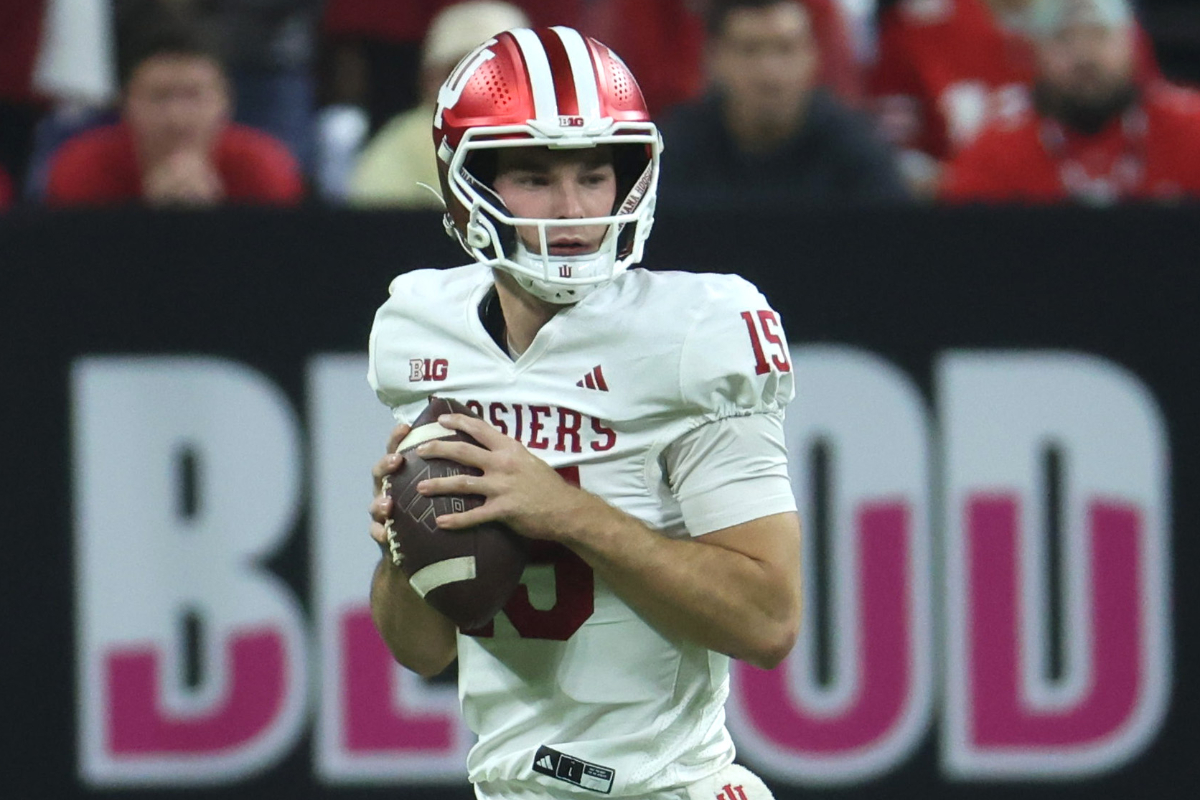
Fernando Mendoza (QB, Indiana Hoosiers; 2026)
The rise of Fernando Mendoza has been meteoric and justified. He processes quickly, throws with anticipation and shows poise well beyond his experience level. His accuracy in the intermediate game fuels Indiana’s offense and his mobility adds situational value without defining his profile. Mendoza has shown command in high-leverage moments, and his Big Ten Championship performance vaulted him into Heisman contention. He profiles as a potential first overall NFL pick if his development continues on its current trajectory.
Nate Frazier (RB, Georgia Bulldogs; 2027)
Nate Frazier finished the year strong after a measured start, flashing the polished skill set scouts want. He runs with patience, excellent vision and consistent contact balance. His pass protection and receiving ability already meet professional standards, making him a true three-down back. Frazier may never be the flashiest runner, but he maximizes what is blocked and consistently falls forward. He projects as a long-term NFL starter with high weekly utility.
Dante Moore (QB, Oregon Ducks; 2026)
Dante Moore looks like a different quarterback after sitting behind Dillon Gabriel. His footwork is cleaner, decision-making sharper and confidence restored following a difficult freshman year at UCLA. He is arguably the best pure passer in college football, with exceptional arm talent and accuracy to the field side. The remaining question is timing; Moore has the tools to declare early, but another year could solidify him as a top-tier NFL prospect.
Micah Hudson (WR, Texas Tech Red Raiders; 2027)
One of the most intriguing devy stash candidates, Micah Hudson is a five-star recruit with rare explosiveness. Although he has barely seen the field over two seasons, he flashed in Week 14 with two touchdowns. Hudson accelerates instantly, tracks the ball naturally and has elite twitch after the catch. The production is not there yet, but the talent is undeniable. This is a patience play that could pay off in a massive way.
Kevin Concepcion (WR, Texas A&M Aggies; 2026)
Kevin Concepcion is proof that the transfer portal can still create stars. He is a sudden, versatile receiver who thrives in space and consistently wins on option routes. His ability to separate underneath and create after the catch drives volume and efficiency. Concepcion has elevated his national profile rapidly and is now firmly on early 2026 draft radars. His game translates cleanly to the NFL as a high-end slot or flanker.
Ryan Williams (WR, Alabama Crimson Tide; 2027)
Ryan Williams is enduring the classic sophomore lull, but nothing about his long-term outlook has changed. He still flashes elite body control, vertical ability and contested-catch dominance. The consistency will return. Williams was once mentioned alongside Jeremiah Smith for good reason, and that upside remains intact. There is a buy window in devy formats and long-term patience will be rewarded with a high-impact NFL receiver.
Malachi Toney (WR, Miami Hurricanes; 2028)
One of the biggest surprises in the country has been Malachi Toney. A three-star true freshman playing far above his recruiting pedigree, he shows advanced route feel, fearless play strength and consistent hands. Miami trusts him in critical situations and he has delivered. Toney separates naturally and competes at the catch point despite his modest size. He is already a first-round devy lock and his ceiling continues to rise.
Trinidad Chambliss (QB, Ole Miss Rebels; 2026)
Trinidad Chambliss is the breakout story of the season. After transferring from Ferris State and backing up Austin Simmons, he seized his opportunity and never let go. Chambliss plays with calm confidence, functional athleticism and impressive field vision. He protects the football and distributes it efficiently while still attacking downfield. The lack of a full Division I résumé raises some questions for Chambliss, but his performance demands attention.
John Mateer (QB, Oklahoma Sooners; 2026)
John Mateer’s early-season stretch looked like Heisman material before a broken thumb derailed momentum. He remains a fearless gunslinger with plus arm strength and creative instincts. Since returning, his consistency has dipped, but the tools remain evident. Mateer occasionally trusts his arm too much, but his aggressive mentality fits modern NFL concepts. Another year in college should sharpen his decision-making and stabilize his draft projection.
Alonza Barnett III (QB, James Madison Dukes; 2026)
Although not a traditional devy target, Alonza Barnett’s fantasy value is undeniable. He is a true dual-threat quarterback, with a high weekly floor thanks to his rushing production. Barnett eclipsed 500 rushing yards with 14 rushing touchdowns this season and adds functional passing ability. The upside may be capped, but in Campus to Canton (C2C) and deeper devy formats, his profile is extremely useful.
Shazz Preston (WR, Tulane Green Wave; 2027)
Shazz Preston is a former Alabama recruit who largely flew under the radar after transferring. He has good size, reliable hands and solid vertical ability, but he lacks elite separation traits. Preston is unlikely to become a devy centerpiece, but he is worth monitoring in deeper leagues. His pedigree and path to volume keep him relevant if his development continues at Tulane.
RELATED: 2026 NFL Draft-Eligible Players To Hold or Sell for a Devy Fantasy Football Championship Push

Thanks for reading my article on “2025 College Football Playoff Preview: Best Bets & Devy Fantasy Football Storylines”. For more Devy and College Fantasy Football content, follow me on Twitter/X @PoshplaysFF.
*Photo Credit: Trevor Ruszkowski – USA TODAY Sports*
