I can already hear the doubters saying, “It’s too early for a 2027 dynasty rookie mock draft!” But hear me out; there’s more than one reason to get ahead of the game.

Way-Too-Early 2027 Dynasty Rookie Mock Draft | Superflex, TE Premium
Why a 2027 Mock Draft?
Most dynasty managers right now are knee-deep in 2026 rookie draft prep: finalising rankings, weighing up landing spots and working through potential trade scenarios.
You might be considering moving those future picks to land the final piece for a championship push. But the real question is, what are you actually giving up? On the flip side, if you’re rebuilding, this is exactly the kind of class you’ve been waiting for. Having a clear view of the potential names and positions available can help shape how aggressive you want to be in acquiring additional 2027 capital.
And then there’s the third group, the ones who just can’t help themselves. If you’re anything like me, looking ahead and mapping out future classes is half the fun of dynasty. So let’s lean into it!
This is a way-too-early look at the 2027 rookie class, one that’s loaded with talent, full of volatility and already shaping how smart dynasty managers are building their teams today.
RELATED: How To Scout Rookies: An Introduction to Watching Tape
Initial Thoughts on the 2027 Class
You’ve probably heard the noise by now, but it’s justified. The 2027 class has the potential to reshape the dynasty landscape. Simply put, it projects to be absolutely loaded.
Sharp dynasty managers have already been planning for this. Many rebuilds over the past year have been quietly centred around acquiring 2027 draft capital. If you haven’t started yet, this upcoming rookie draft may be your last real window. Once we get into the season and these players continue to produce, those picks are going to become near untouchable. However, there is more uncertainty than ever. We’re now fully in the era of the transfer portal and Name, Image, Likeness (NIL), where returning to school is a legitimate and often lucrative option. Some of these names won’t declare when expected, especially if draft capital projections don’t align with expectations.
The quarterback position perfectly illustrates this volatility. The 2026 class was expected to be loaded, but many failed to hit or returned to school. Some of those names now roll into 2027, while others still need to rebuild their stock. That said, this class has the upside to rival the six first-round quarterbacks we saw in 2024. The true strength of this class, though, is at wide receiver. Many of these prospects have been producing as true WR1s since their freshman seasons and already show traits of future NFL alpha receivers. Meanwhile, the running back position lacks a clear generational RB1, but the depth is strong. There are multiple backs with the tools to win jobs at the next level, making this a class where situation and landing spot could heavily dictate fantasy value.
First Round 2027 Dynasty Rookie Mock Draft
1.01: Jeremiah Smith (WR, Ohio State Buckeyes)
Jeremiah Smith is the easy 1.01 and honestly, it’s not particularly close. In a class loaded with quarterbacks, it’s still a wide receiver who should go first overall. Jeremiah Smith is simply the best receiver prospect I’ve watched in my time playing dynasty, and there’s a reason he draws comparisons to Julio Jones.
From the moment he stepped on the field at Ohio State, Smith dominated, putting up elite production and delivering in the biggest moments. He brings a rare size-speed combination with true alpha receiver traits. He wins at all three levels, tracks the ball effortlessly and consistently separates with advanced route running. After the catch, the Buckeye receiver is just as dangerous, combining power and explosiveness to create chunk plays.
What really stands out is his complete profile: there are no real weaknesses to his game. In dynasty terms, Jeremiah Smith is the type of prospect you build around. If you have 1.01 in 2027, the decision is already made.
1.02: Dante Moore (QB, Oregon Ducks)
In a deep class, Dante Moore’s decision to return to Oregon for 2026 could prove pivotal. He likely would’ve been a top-six pick in dynasty rookie drafts in 2026, but another year of development gives him the chance to solidify himself as one of the premier quarterbacks in this class.
Moore is a gifted, rhythm-based passer with high-end arm talent and a quick release that keeps offenses on schedule. He thrives attacking all three levels, particularly downfield, where his touch and ball placement stand out. His growth in processing and pocket movement has been evident, allowing him to operate with confidence and control.
There are limitations, as he offers little as a runner and can force throws under pressure, but in superflex, passing upside is highly valuable. Dante Moore has the tools to develop into a franchise-calibre starter.
1.03: Arch Manning (QB, Texas Longhorns)
This projection is based on expected growth. Arch Manning showed flashes in his first full season as Texas’ starter, but it’s the trajectory that makes him such an appealing dynasty bet.
Manning brings the tools you can’t teach: high-end arm talent, a quick release and legitimate athleticism. His ability to push the ball downfield stands out immediately, while his mobility adds a valuable rushing element that stresses defenses. As the 2025 season progressed, so did his confidence, with clear improvements in anticipation and command of the offense. However, the inconsistency persists. Accuracy and footwork can break down under pressure, and his processing needs to speed up against complex looks.
But if the second-half version of 2025 is the real baseline, Arch Manning has the highest ceiling of any quarterback in this class.
1.04: Julian Sayin (QB, Ohio State Buckeyes)
It’s funny, Julian Sayin just keeps getting doubted, and all he does is produce. From his Elite 11 MVP days to leading Ohio State, he’s consistently delivered at every level, and his 2025 season only reinforced that.
The definition of a rhythm passer, Sayin’s accuracy, processing and quick release allow him to operate an offense with efficiency and control, as shown by his outstanding 77% completion rate. He thrives within structure, distributing the ball and keeping drives on schedule with calm decision-making. However, he offers little as a runner and can struggle when pressured or forced off-script.
However, that doesn’t matter in the right system. Superflex quarterbacks who combine production with stability carry real value, and Julian Sayin may be one of the safest bets in this class.
1.05: Cam Coleman (WR, Texas Longhorns)
Cam Coleman was one of the hottest names in the transfer portal, landing at Texas to pair with Arch Manning in a move that could elevate his stock into the top tier of this class. The traits have always been there, and now the situation matches the talent.
Bringing a rare size-speed profile with true X-receiver upside, Coleman is a vertical threat who tracks the ball effortlessly and dominates at the catch point. He also offers strong Yards After Catch (YAC) ability and when healthy, he’s shown he can take over games against top competition.
There are areas to refine, particularly consistency and release versus press, but the ceiling is undeniable. In this offense, Cam Coleman has a real chance to emerge as a future alpha and cement himself as a first-round dynasty asset.
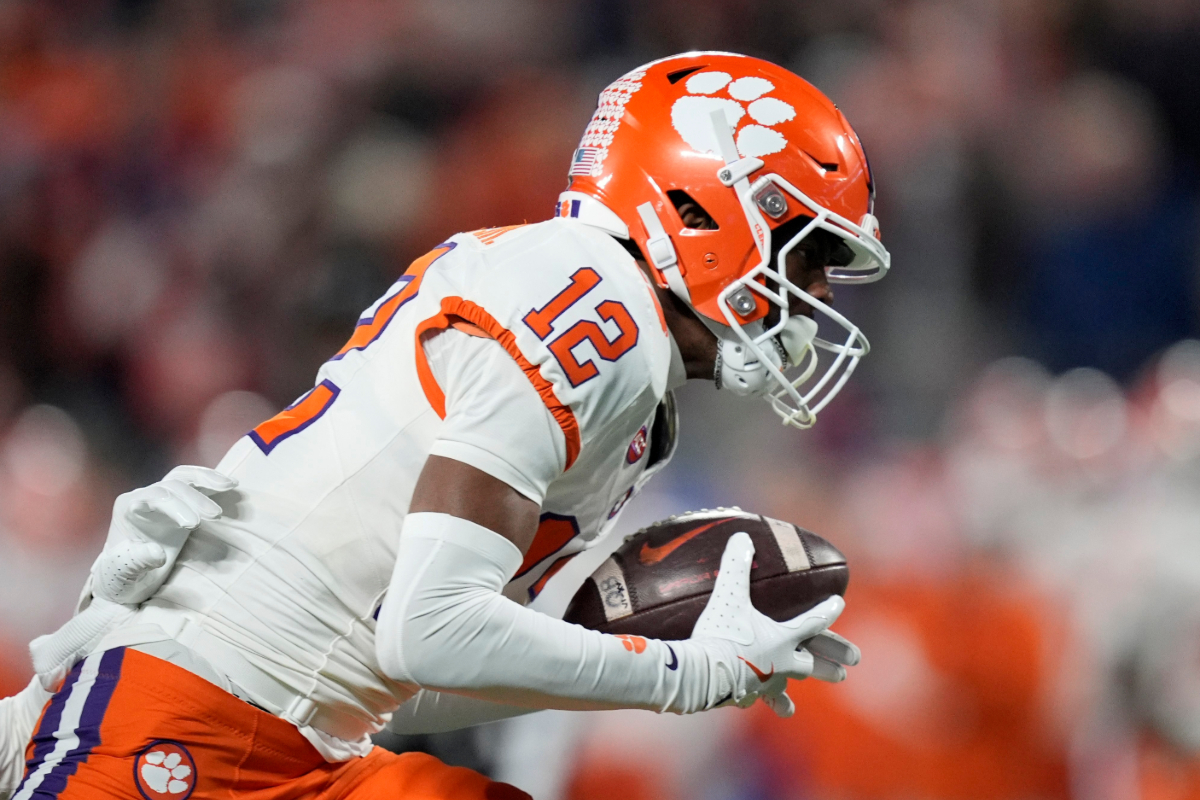
1.06: Bryant Wesco (WR, Clemson Tigers)
Clemson’s 2025 season may have disappointed, but Bryant Wesco was trending in the opposite direction before injury cut things short. Now fully healthy and stepping into a larger role with vacated targets, he’s primed for a true breakout campaign.
Wesco is a vertical playmaker with legitimate big-play ability, averaging over 17 yards per catch across his career. He tracks the deep ball naturally and shows the ability to separate late, giving quarterbacks a reliable downfield target from the boundary. His production as a young player, particularly in high-leverage games, highlights a skill set that translates.
He still needs to improve his drops, play strength and consistency, but the trajectory is extremely encouraging. If he puts together a full, healthy season, Bryant Wesco has the upside to push into the top tier of this receiver class and become a true difference-maker.
1.07: CJ Carr (QB, Notre Dame Fighting Irish)
CJ Carr might be the first name on this list that casual fans aren’t fully locked into yet, but that won’t last long. His breakout feels like it’s coming, and this could look low by the end of the season.
Impressing in his first year as Notre Dame’s starter, Carr combines efficiency with control. He wins with timing, anticipation and a compact release that allows him to deliver accurate throws within structure consistently. When he’s in rhythm, he can carve up defenses and keep an offense on schedule. But the questions come when things break down. Carr offers little as a runner and can struggle under pressure, with some inconsistency showing against top competition.
Still, the growth curve is encouraging. If he takes another step in 2026, CJ Carr has a real chance to climb into the top tier of this quarterback class.
1.08: Ryan Coleman-Williams (WR, Alabama Crimson Tide)
A year ago, Ryan Coleman-Williams was mentioned in the same breath as Jeremiah Smith. Fast forward, and the narrative has swung hard the other way, but this feels like an overcorrection. The talent hasn’t gone anywhere.
Coleman-Williams brings elite speed and a dynamic playmaking profile, with the ability to win vertically and create after the catch. His freshman season showed just how dangerous he can be, and even during a quieter sophomore year, the flashes of high-end upside remained. The concerns with drops, consistency and handling increased defensive attention are real and will define his next step.
But he’s still one of the youngest players in the class with elite physical tools. If the consistency comes in 2026, Ryan Coleman-Williams has the upside to re-establish himself as a top-tier receiver in this class.
1.09: Ryan Wingo (WR, Texas Longhorns)
Ryan Wingo’s stock may hinge on how he shares the spotlight with Cam Coleman, but the talent is undeniable. He’s been highly productive at Texas and offers a different skill set that could allow both players to thrive.
With a rare size-speed combination, Wingo can stretch defenses vertically and create explosive plays. He’s at his best downfield, where he can stack defenders and turn receptions into big gains, while also showing physicality and vision after the catch. The next step is refinement; drops and route consistency need improvement, particularly against tighter coverage, but the upside is clear.
If Ryan Wingo continues to develop and holds his role in a crowded offense, he has the tools to remain a high-end receiver prospect in this class.
1.10: Ahmad Hardy (RB, Missouri Tigers)
The first running back off the board, and this feels like the right spot. Ahmad Hardy may not be a household name yet, but his production and profile are quickly turning heads.
Hardy is a compact, powerful runner who blends elite contact balance with sharp vision and surprising burst. He consistently maximises his blocking, forcing missed tackles and creating yards after contact, while still offering enough speed to break chunk plays. His back-to-back dominant seasons show a player capable of handling volume and producing efficiently. The main question is passing-game involvement, which could cap his ceiling in PPR formats, but as a pure runner, the traits are clear.
In a class without a true standout RB1, Ahmad Hardy has the tools to emerge as the first back selected and become a potential three-down option.
1.11: Trey’Dez Green (TE, LSU Tigers)
Trey’Dez Green is a breakout candidate and a perfect swing at the end of the first round in TEP formats. With his profile, it wouldn’t be a surprise to see him climb even higher by this time next year.
At 6’ 7” and 240 pounds, Green is a matchup nightmare and already a dominant red-zone weapon, leading LSU in touchdowns last season. His size, catch radius and basketball background make him a natural finisher, but what elevates his ceiling is his movement ability for a player of that build.
With a new offensive system expected to feature him more prominently, the opportunity is there for a true breakout. While his blocking still needs development, that won’t impact fantasy value. In TEP leagues, Trey’Dez Green has the upside to become a difference-making asset at the position.
1.12: LaNorris Sellers (QB, South Carolina Gamecocks)
A devy darling just a year ago, LaNorris Sellers‘ 2025 season was a reminder of how volatile quarterback evaluation can be. His production dipped, but the ceiling hasn’t gone anywhere.
Sellers offers a rare size-speed combination with legitimate dual-threat ability. He can push the ball downfield with ease and adds value as a runner, constantly putting stress on defenses when things are clicking. At his best, he looks like a high-end modern quarterback. But the concern is consistency; sack totals, decision-making and accuracy all regressed in 2025, raising questions about his development as a passer.
Still, the upside is worth betting on. If LaNorris Sellers can clean up the processing and play within structure, he has one of the highest ceilings in this class.
Second Round 2027 Dynasty Rookie Mock Draft
2.01: Nick Marsh (WR, Indiana Hoosiers)
Bringing a strong blend of production and physical tools, Nick Marsh now lands in Indiana with a chance to further elevate his profile. A productive boundary receiver, he wins with size, speed and physicality, showing the ability to create after the catch and stretch defenses vertically.
The concern with Marsh is consistency, as he needs to address his drops and declining success with contested catches. Still, with a larger platform and continued development, Marsh has the traits to rise quickly and outperform this spot.
2.02: T.J. Moore (WR, Clemson Tigers)
TJ Moore is a classy, polished receiver who hasn’t quite exploded yet, but the trajectory remains encouraging. A productive two-year starter, he stepped into a WR1 role in 2025 and handled the volume well. He wins with body control, ball tracking and reliable hands, thriving on intermediate and vertical routes.
Although still very young, his development curve is a major plus. Moore is first eligible in 2027 but could easily stay another year. Concerns around physicality, blocking and consistency remain, but the foundation is strong.
2.03: Kewan Lacy (RB, Ole Miss Rebels)
Kewan Lacy announced himself in a big way after transferring from Missouri, putting up elite production and emerging as a true workhorse. His blend of track speed and open-field vision makes him one of the most explosive backs in the class. He consistently finds daylight and turns it into chunk plays, with legit touchdown production to match. If the receiving role continues to grow, Lacy has clear Round 1 upside.
2.04: Darian Mensah (QB, Miami Hurricanes)
One of the more intriguing transfer quarterbacks in the class, Darian Mensah pairs strong production with a great landing spot. He wins with accuracy, processing and intermediate passing, consistently operating in rhythm and protecting the football.
The concerns are physical: his frame, deep-ball consistency and ball security under pressure. Still, in the right system, Mensah has clear upside as an efficient, high-volume passer who could rise quickly.
2.05: Jadan Baugh (RB, Florida Gators)
Jadan Baugh might be the most underrated back in this class and one of the biggest risers to watch. At 6’ 1” and 230+ lbs, he blends size with surprising agility, elite contact balance and real receiving ability. He forces missed tackles at a high rate and protects the football exceptionally well.
The upside is clear, although there are still questions around his decisiveness and overall production. But if it all clicks in 2026, Baugh has a real shot to push for RB1 in this class.
2.06: Mark Fletcher Jr. (RB, Miami Hurricanes)
Mark Fletcher was a key piece of Miami’s title run and returns as the clear lead back in 2026. A powerful, downhill runner, he wins with size, balance and physicality, consistently wearing down defenses and finishing drives. He lacks true home-run speed and still needs growth as a receiver, but Fletcher’s profile is fantasy-friendly. If the volume holds, he has a clear path to early production and could outkick this draft slot.
2.07: Mario Craver (WR, Texas A&M Aggies)
As one of the most explosive players in the class, Mario Craver brings elite speed and dangerous YAC ability to the table. He became a key weapon after transferring and produced from multiple alignments. He’s electric with the ball in his hands and a constant big-play threat.
However, the concern is size and durability. Craver is currently at around 165 pounds, which could limit usage. Still, in the right scheme, he has game-breaking upside.
2.08: Charlie Becker (WR, Indiana Hoosiers)
Charlie Becker’s breakout came late, but it was undeniable. Once given the opportunity, he became a difference-maker in big moments, producing in high-leverage games and throughout the playoff run. A vertical threat with strong ball tracking and growing route nuance, he thrives on explosive plays and doesn’t need heavy volume to impact games. If the late-season surge proves real, Becker is a fast riser with legit upside beyond this spot.
2.09: Brendan Sorsby (QB, Texas Tech Red Raiders)
Brendan Sorsby is a toolsy dual-threat quarterback whose transfer could unlock another level. He combines NFL arm talent with legit rushing upside, making him a dangerous playmaker when in rhythm. The concern is consistency: processing, pocket discipline and late-season regression all show up on tape. There’s clear upside here, but Sorsby still feels more projection than finished product heading into 2026.
2.10: Nate Frazier (RB, Georgia Bulldogs
Nate Frazier is one of the more complete backs in the class, blending speed, contact balance and receiving ability. He’s shown steady development at Georgia and profiles as a three-down option with big-play upside. His acceleration and burst make him dangerous in space, while his toughness shows between the tackles. His ball security and pass protection need refinement, but if that cleans up, Frazier has clear starter upside.
2.11: Evan Stewart (WR, Oregon Ducks)
Evan Stewart feels like the forgotten man after injury derailed his momentum, but the talent hasn’t gone anywhere. A true vertical burner, he wins with elite speed, sharp route breaks and natural separation ability. The concern is size and durability, especially against physical coverage. If he returns healthy and regains form, Stewart has the upside to massively outperform this draft slot.
2.12: Isaac Brown (RB, Louisville Cardinals)
Isaac Brown is an explosive, big-play back who thrives on burst and acceleration. When healthy, he’s a home-run threat with elite efficiency, highlighted by outstanding yards per carry and strong early production. He fits best in outside zone schemes where his quickness and vision shine. Durability and size are the concerns, but if he stays healthy, Brown has upside beyond what this draft slot suggests.
Honorable Mentions
Such is the depth of the 2027 class that several names just outside this mock could easily force their way into Round 2 or higher with another step forward.
- Nico Iamaleava (QB, UCLA Bruins)
- DJ Lagway (QB, Baylor Bears)
- Demond Williams Jr. (QB, Washington Huskies)
- Sam Leavitt (QB, LSU Tigers)
- Drew Mestemaker (QB, Oklahoma State Cowboys)
- Jayden Maiava (QB, USC Trojans)
- Trinidad Chambliss (QB, Ole Miss Rebels)
- Justice Haynes (RB, Georgia Tech Yellow Jackets)
- Caden Durham (RB, LSU Tigers)
- LJ Martin (RB, BYU Cougars)
- Waymond Jordan (RB, USC Trojans)
- Brandon Inniss (WR, Ohio State Buckeyes)
- Mylan Graham (WR, Notre Dame Fighting Irish)
- Nyck Harbor (WR, South Carolina Gamecocks)
- Eugene Wilson III (WR, LSU Tigers)
Who’s your favorite early 2027 prospect? Who feels too high or too low? Let’s hear it in the comments!
RELATED: Pre-NFL Draft 2026 Dynasty Rookie Mock Draft | Superflex, TE Premium

Thanks for reading my “Way-Too-Early 2027 Dynasty Rookie Mock Draft.” For more Devy and College Fantasy Football content, follow me on Twitter/X @PoshplaysFF.
*Photo Credit: Jim Dedmon – USA TODAY Sports*
