Poker films get a lot wrong. The dramatic music swells, the camera zooms on a twitching eyebrow and the hero calls a massive bluff based on nothing more than a gut feeling. Yet buried beneath the Hollywood gloss are real strategic concepts that apply at your local card room or online table. The trick is knowing which parts to take seriously and which to leave on the screen.
“Rounders”, “Molly’s Game”, “Casino Royale” and “The Cincinnati Kid” each contain moments of genuine poker wisdom. These films reached millions of viewers who had never studied pot odds or positional play. Some of those viewers became serious players. The best approach is to treat these movies as starting points rather than instructional guides, extracting the lessons that hold up under scrutiny while discarding the fantasies.

Learning From Poker Movies: How Lessons From Poker Media Can Improve Your Own Game
What Table Selection Teaches You Before Cards Are Dealt
“Rounders” delivers one of its sharpest lessons through a line most viewers remember: If you cannot spot the sucker at the table, you are the sucker. This principle applies beyond high-stakes backrooms and private poker games run by underground hosts. The film shows Mike McDermott (Matt Damon) grinding his way back after losing everything, and his recovery depends less on card skills than on finding tables where weaker players sit with loose bankrolls.
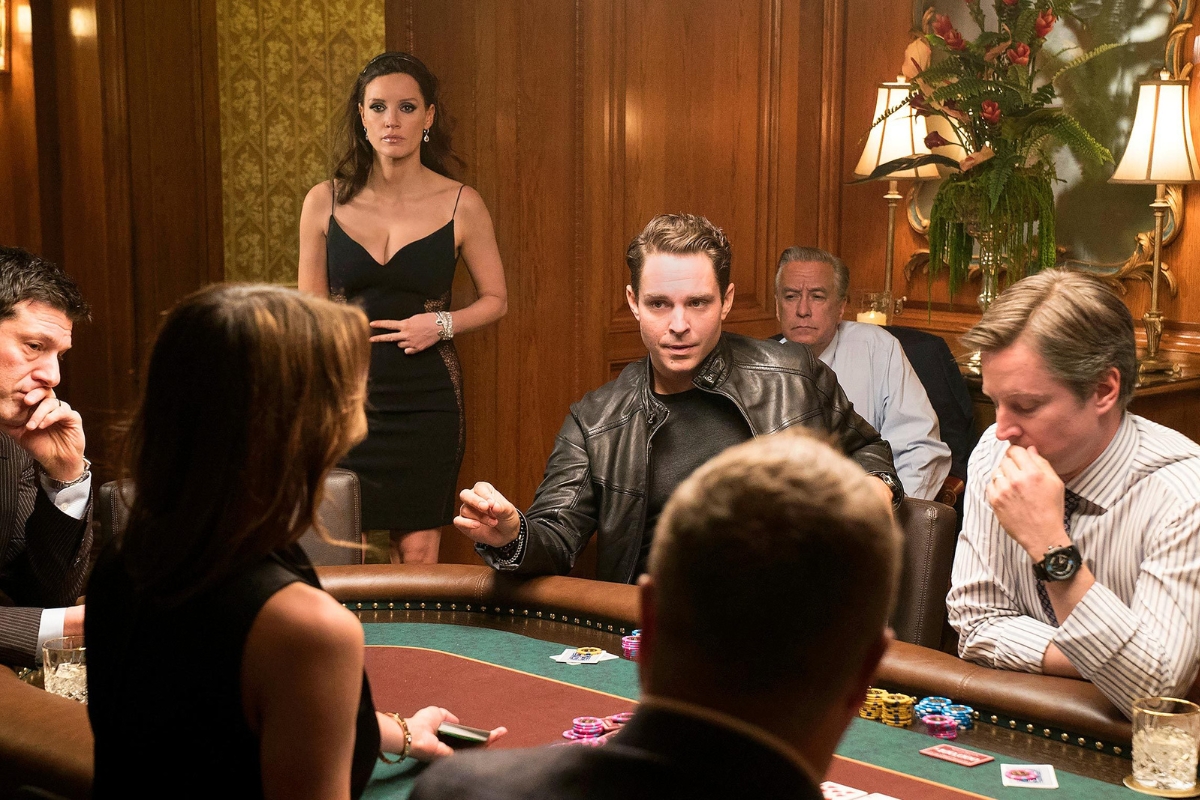
“Molly’s Game” reinforces this through its depiction of Hollywood home games, where amateur celebrities routinely donated money to sharper regulars.
Choosing where you play matters as much as how you play. A skilled player at a table full of professionals will struggle to find edges, while a competent player among recreational opponents can profit steadily with basic fundamentals.
Physical Tells Are Overrated
“Rounders” places enormous weight on physical tells. Mike reads Teddy KGB’s (John Malkovich) Oreo cookie habit and uses it to win a deciding pot. The scene makes for good cinema, but it exaggerates how useful tells are in actual play.
Skilled opponents often fake tells or suppress them entirely. A player who scratches his nose when bluffing at a home game will stop doing it after a few sessions if he pays any attention to his results. Professional player Daniel Negreanu has noted that game theory and physical reads work best in combination, but relying on reads alone is risky. Betting patterns, timing and bet sizing provide more consistent information than body language.
Newer players sometimes focus too heavily on spotting tells because movies make it seem like the secret to winning, while the reality is subtler. Real tells involve micro-gestures and betting behavior rather than dramatic quirks. Studying how opponents size their bets across different hands gives you far more reliable data than watching for nervous twitches.
Emotional Control Separates Winners from Losers
“Molly’s Game“, based on Molly Bloom’s (Jessica Chastain) account of running high-stakes underground games, shows tilt in its many forms. Tilt goes beyond simple anger. The film depicts players who lose a big pot and then start chasing losses, making larger and larger bets in a desperate attempt to get back to even.
Bloom observed thousands of hands during her years hosting games. She noted that many players become unwilling to take risks after losing, which paradoxically causes them to lose more over time. She emphasized the importance of managing your mind and emotions as one of the most profound lessons from that period.
“Rounders” illustrates this through its two main characters. Worm (Edward Norton) is emotional and impulsive, making irrational decisions and repeating the same mistakes. Mike is calculated and reserved. The contrast shows how emotional reactions lead to poor outcomes. Worm ends the film broke and in danger. Mike survives because he keeps his head.
Professional guidelines suggest following a structured bankroll management plan to prevent tilt from destroying your results. A 2024 eCOGRA report found that 78% of consistent winners in online poker credited bankroll management as their top success factor. Setting loss limits per session prevents emotional decisions during downswings.
Trapping Aggressive Opponents
The final hand in “Rounders” demonstrates a useful concept against aggressive players. Mike checks strong hands to let Teddy KGB bluff him. Against an opponent prone to overbets, checking with a big hand gives them room to make a mistake.
This tactic works best against specific player types. An aggressive opponent who bets big when sensing weakness will donate chips to a patient player holding a strong hand. Passive opponents require a different approach since they will check behind rather than bet.
“Casino Royale” applies a similar idea in its climactic hand. James Bond (Daniel Craig) checks with the best possible hand on the turn and river, hoping his opponents will bet into him. The scene assumes unusually cooperative opponents who fail to apply pressure, but the underlying concept is sound. Slow-playing against aggressive players maximizes value from strong holdings.
Variance Happens to Everyone
“The Cincinnati Kid”, released in 1965, ends with Eric Stoner (Steve McQueen) losing a full house to a straight flush. The scene reminds viewers that despite strong play, the cards have the final say. Poker combines skill with chance, and no amount of strategy guarantees a winning result on any single hand.
This lesson applies to bankroll management. Professional recommendations suggest keeping $20-30 buy-ins for cash games and $50-100 buy-ins for tournaments. These buffers protect against the inevitable losing streaks that hit every player regardless of skill level.
Phil Galfond’s documentary series, which premiered in June 2024, shows variance at the highest levels. During his challenge match, Galfond found himself down $1,000,000, a deficit of 45 buy-ins, and considered quitting. He eventually pulled back to win with only a few hundred hands remaining. Galfond said the victory meant more to him than his three World Series of Poker bracelets.
The documentary demonstrates that even elite players face brutal swings. Accepting variance as part of the game prevents emotional collapse during rough patches.
Learning With Others Accelerates Growth
Galfond offers practical advice about poker development. He credits his success to surrounding himself with other players who were learning alongside him. Training videos and solvers provide valuable instruction, but studying alone lacks a feedback loop. Discussing hands with others, debating strategies and sharing motivation speed up improvement.
“The Ultimate Stack” documentary from 2024 features contributions from professional players, including Chris Moorman, Garrett Adelstein, Tony Dunst, Mike Holtz and Brad Owen. The film follows a tournament through the chips themselves, tracking each player until their elimination. It introduces poker mechanics to newcomers without boring experienced viewers.
Watching content like this alongside other players creates opportunities for discussion. Pausing to talk through a hand or debate a decision builds the kind of collaborative learning environment Galfond describes.
Separating Fiction From Strategy
“Casino Royale” changed its card game from baccarat to poker because Texas Hold’em offers more strategic depth. Baccarat is largely based on chance, while poker allows for decisions that affect outcomes. The film’s climactic hand, however, features a probability so low that most poker rooms would pay out a bad beat jackpot for it. Bond’s straight flush against aces full makes for a memorable scene, but should not set expectations for what happens at real tables.
Poker movies compress hours of play into minutes of screen time. The boring parts where nothing happens get cut. What remains are dramatic confrontations and unlikely hands. Real poker involves long stretches of folding, small pots and incremental gains.
Taking poker films at face value leads to frustration when actual play feels slower and less dramatic. The lessons worth keeping are the ones about discipline, table selection, emotional control and strategic thinking against different opponent types. The flashy reads and improbable hands are entertainment, nothing more.

Thanks for reading our article on “Learning From Poker Movies: How Lessons From Poker Media Can Improve Your Own Game”. You can find more articles like this here on our website or on our YouTube channel.
*Photo Credit: Name – USA TODAY Sports*
